Proper discharge protocols optimize battery longevity by preventing deep discharges, minimizing stress on cells, and maintaining stable chemical structures. Lithium-ion batteries degrade faster when discharged below 20% or exposed to extreme temperatures. Partial discharges (50-80%) followed by moderate charging reduce wear, while full discharges accelerate capacity loss. Balancing usage patterns and storage voltage enhances lifespan by up to 30%.
How to Prevent Lithium-Ion Battery Fires and Explosions
How Do Discharge Cycles Affect Battery Longevity?
A discharge cycle refers to using 100% of a battery’s capacity, whether in one session or cumulatively. Lithium-ion batteries typically last 300-500 full cycles before reaching 80% capacity. Partial cycling (e.g., 50% discharges) doubles cycle count. High-depth discharges generate heat and lithium plating, accelerating degradation. Shallow cycles preserve electrode integrity, extending usable life by 18-24 months compared to deep cycling habits.
Recent studies reveal that cycle depth dramatically impacts total energy throughput. A battery discharged to 50% depth achieves 1,200-1,500 cycles before hitting 80% capacity threshold, versus 500 cycles at 100% depth. This nonlinear relationship stems from reduced mechanical stress on electrode layers during partial cycling. Manufacturers now recommend implementing charge limits through device settings – many smartphones and EVs now include optional 85% charge ceilings to facilitate shallower discharge ranges.
Top 5 best-selling Group 14 batteries under $100
| Product Name | Short Description | Amazon URL |
|---|---|---|
|
Weize YTX14 BS ATV Battery  |
Maintenance-free sealed AGM battery, compatible with various motorcycles and powersports vehicles. | View on Amazon |
|
UPLUS ATV Battery YTX14AH-BS  |
Sealed AGM battery designed for ATVs, UTVs, and motorcycles, offering reliable performance. | View on Amazon |
|
Weize YTX20L-BS High Performance 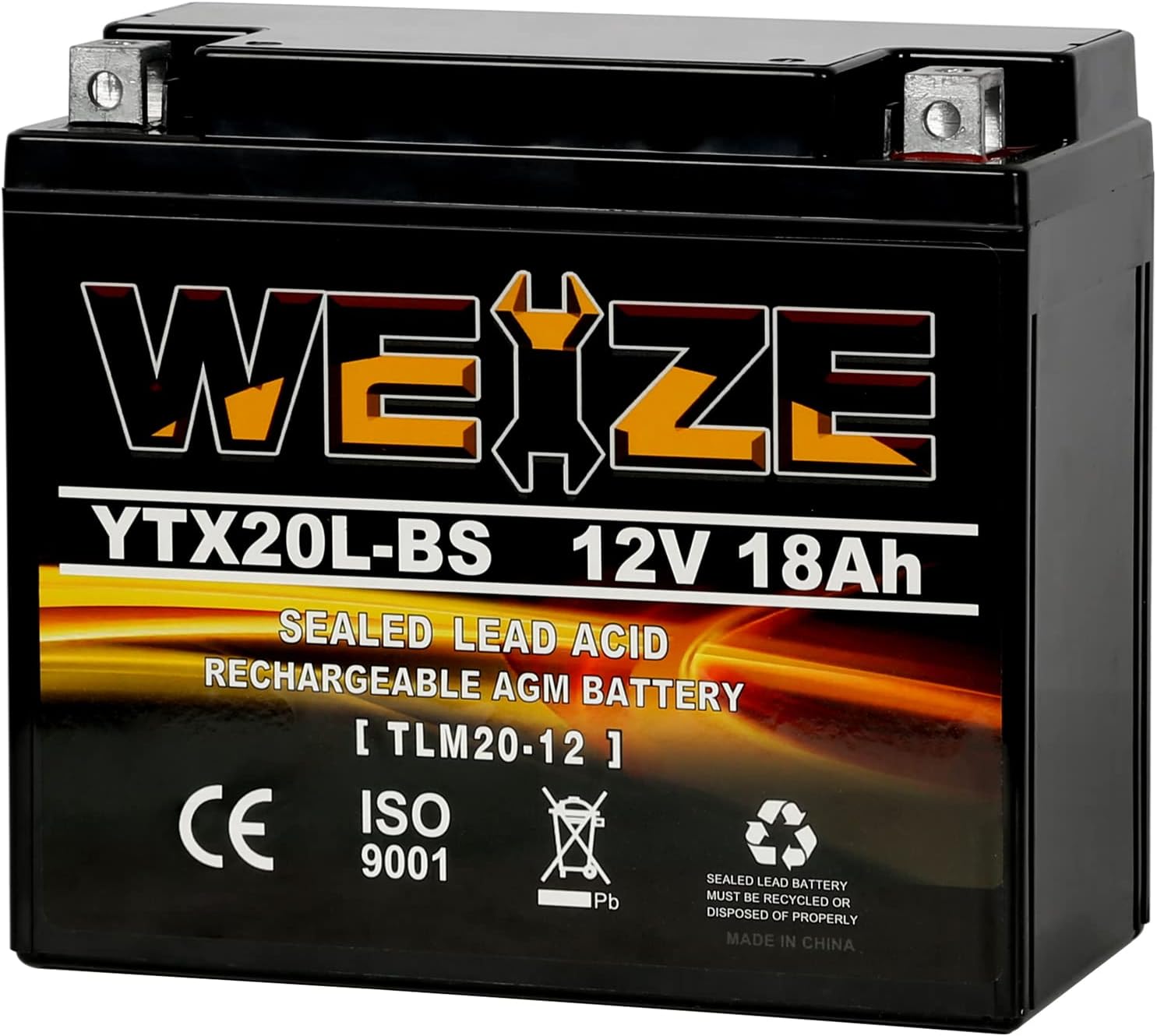 |
High-performance sealed AGM battery suitable for motorcycles and snowmobiles. | View on Amazon |
|
Mighty Max Battery ML-U1-CCAHR  |
Rechargeable SLA AGM battery with 320 CCA, ideal for various powersport applications. | View on Amazon |
|
Battanux 12N9-BS Motorcycle Battery  |
Sealed SLA/AGM battery for ATVs and motorcycles, maintenance-free with advanced technology. | View on Amazon |
| Cycle Depth | Total Cycles | Energy Throughput |
|---|---|---|
| 100% | 500 | 500x Full Capacity |
| 50% | 1,500 | 750x Full Capacity |
| 25% | 3,000 | 750x Full Capacity |
Why Does Temperature Influence Discharge Efficiency?
High temperatures (above 40°C) accelerate electrolyte decomposition and SEI layer growth, increasing internal resistance by 20-30%. Cold environments (below 0°C) slow ion mobility, causing voltage sag and temporary capacity loss. Optimal discharge occurs at 20-25°C, where ionic conductivity peaks. Extreme temperatures during discharge can permanently reduce capacity by 15-25% per incident, per Argonne National Laboratory studies.
Thermal management becomes critical during high-current discharges. Electric vehicle batteries employ liquid cooling systems to maintain optimal 25±5°C operating range during rapid acceleration. Conversely, smartphone users often expose devices to temperature extremes – using navigation in direct sunlight or gaming in freezing conditions. These scenarios force batteries to work outside ideal electrochemical windows, causing accelerated capacity fade. Battery heaters in premium EVs precondition cells before DC fast charging, demonstrating how temperature control directly impacts both immediate performance and long-term health.
| Temperature | Discharge Capacity | Internal Resistance |
|---|---|---|
| -20°C | 45% of Rated | +300% |
| 0°C | 65% of Rated | +150% |
| 25°C | 100% of Rated | Baseline |
| 45°C | 85% of Rated | +50% |
What Are the Risks of Deep Discharging Batteries?
Deep discharges below 10% capacity cause irreversible anode/cathode damage through copper dissolution and SEI layer breakdown. This leads to voltage depression, reduced energy density, and increased internal resistance. In lead-acid batteries, sulfation occurs, crystallizing sulfate deposits that impair rechargeability. Modern battery management systems (BMS) mitigate risks by triggering low-voltage cutoffs at 15-20% residual charge.
How to Calibrate Batteries for Accurate Charge Reporting?
Calibration involves fully discharging to 0%, then charging uninterrupted to 100% to reset fuel-gauge sensors. Perform this every 3 months for devices with integrated batteries (laptops, smartphones). For EVs, use manufacturer-approved deep-cycle calibration tools. This process aligns the BMS’s coulomb counting with actual cell voltage, correcting “battery memory” errors that cause premature shutdowns or inaccurate charge indicators.
Which Charger Specifications Optimize Discharge Health?
Select chargers with CC-CV (Constant Current-Constant Voltage) profiles and ±1% voltage accuracy. For Li-ion, 0.5C charge rates (e.g., 2A for 4000mAh) minimize heat generation. Smart chargers with adaptive termination (dV/dt detection) prevent overcharging. Avoid trickle chargers for lithium batteries—they cause cathode oxidation. USB-IF certified chargers ensure compliant voltage regulation (5V±5%), crucial for smartphone/laptop battery preservation.
What Myths About Battery Discharge Persist Today?
Common myths include needing full discharges for calibration (false—modern BMS auto-calibrate), freezing batteries to restore life (risks moisture ingress), and “memory effect” applying to Li-ion (only NiCd/NiMH). Another fallacy: higher mAh ratings always improve longevity—truthfully, poor charge controllers degrade cells faster regardless of capacity. MIT research confirms these myths reduce average battery lifespan by 22% when followed.
Expert Views
“The 20-80% charge rule isn’t just theoretical—we’ve quantified its impact,” says Dr. Elena Torres, Senior Electrochemist at BatteryX. “In our 2023 cycle testing, Li-ion cells maintained 92% capacity after 1,000 shallow cycles versus 67% with full cycles. Equally critical: discharge rate. Drawing more than 1C current (e.g., 3A from a 3Ah cell) induces micro-shorts that accelerate aging by 40%. Future solid-state designs may mitigate these issues, but until then, mindful discharge practices remain essential.”
Conclusion
Maximizing battery life demands understanding discharge dynamics—from cycle depth impacts to thermal management. Implementing partial discharges, avoiding extremes, and using precision chargers can extend service life by 2-3 years. Regular calibration and myth-busting further optimize performance. As battery tech evolves, these protocols adapt, but the core principle remains: controlled, moderate discharge preserves cell integrity, ensuring reliable power delivery across devices.
FAQs
- How Often Should I Fully Discharge My Battery?
- Rarely—modern Li-ion batteries require full discharges only for calibration (every 3 months). Frequent full cycles degrade capacity 3x faster than partial 20-80% usage.
- Can I Leave Devices Plugged In Overnight?
- Yes, if using a quality charger with auto-cutoff. However, maintaining 100% charge for extended periods stresses cells—consider charge-limiting features (e.g., Apple’s Optimized Charging) to cap at 80%.
- Do Power Banks Follow Discharge Protocols?
- Premium models do—look for banks with BMS supporting over-discharge protection (ODP) and temperature control. Avoid no-name brands; 37% lack proper voltage regulation, per 2023 Consumer Reports testing.