How do I check my battery size? Battery size can be checked via the label on the battery casing, which displays codes like Group Size (e.g., 24F, 35), dimensions (length x width x height), and capacity (CCA, Ah). For vehicles, consult the owner’s manual or use online tools with your car’s make/model. Physical measurement with calipers ensures accuracy if labels are damaged.
What Is a Group Size 24 Battery?
How Can You Locate the Battery Size Label?
Most batteries have a printed label on the top or side casing. Look for alphanumeric codes like “Group 35” (vehicle) or “CR2032” (electronics). Automotive batteries often list Cold Cranking Amps (CCA) and Reserve Capacity (RC), while consumer batteries display voltage (V) and milliampere-hours (mAh). Worn labels may require cross-referencing the product manual or manufacturer’s website.
What Do Battery Group Size Codes Mean?
Group Size (e.g., 24, 35, H6) standardizes battery dimensions and terminal positions for compatibility. The Battery Council International (BCI) assigns these codes. A “Group 35″ battery measures 9.06″ x 6.88″ x 8.75”, while “Group 65″ is 12.4″ x 7.5″ x 7.5”. Using the wrong group size can damage terminals or prevent secure installation. Cross-reference BCI charts for accuracy.
Top 5 best-selling Group 14 batteries under $100
| Product Name | Short Description | Amazon URL |
|---|---|---|
|
Weize YTX14 BS ATV Battery  |
Maintenance-free sealed AGM battery, compatible with various motorcycles and powersports vehicles. | View on Amazon |
|
UPLUS ATV Battery YTX14AH-BS  |
Sealed AGM battery designed for ATVs, UTVs, and motorcycles, offering reliable performance. | View on Amazon |
|
Weize YTX20L-BS High Performance 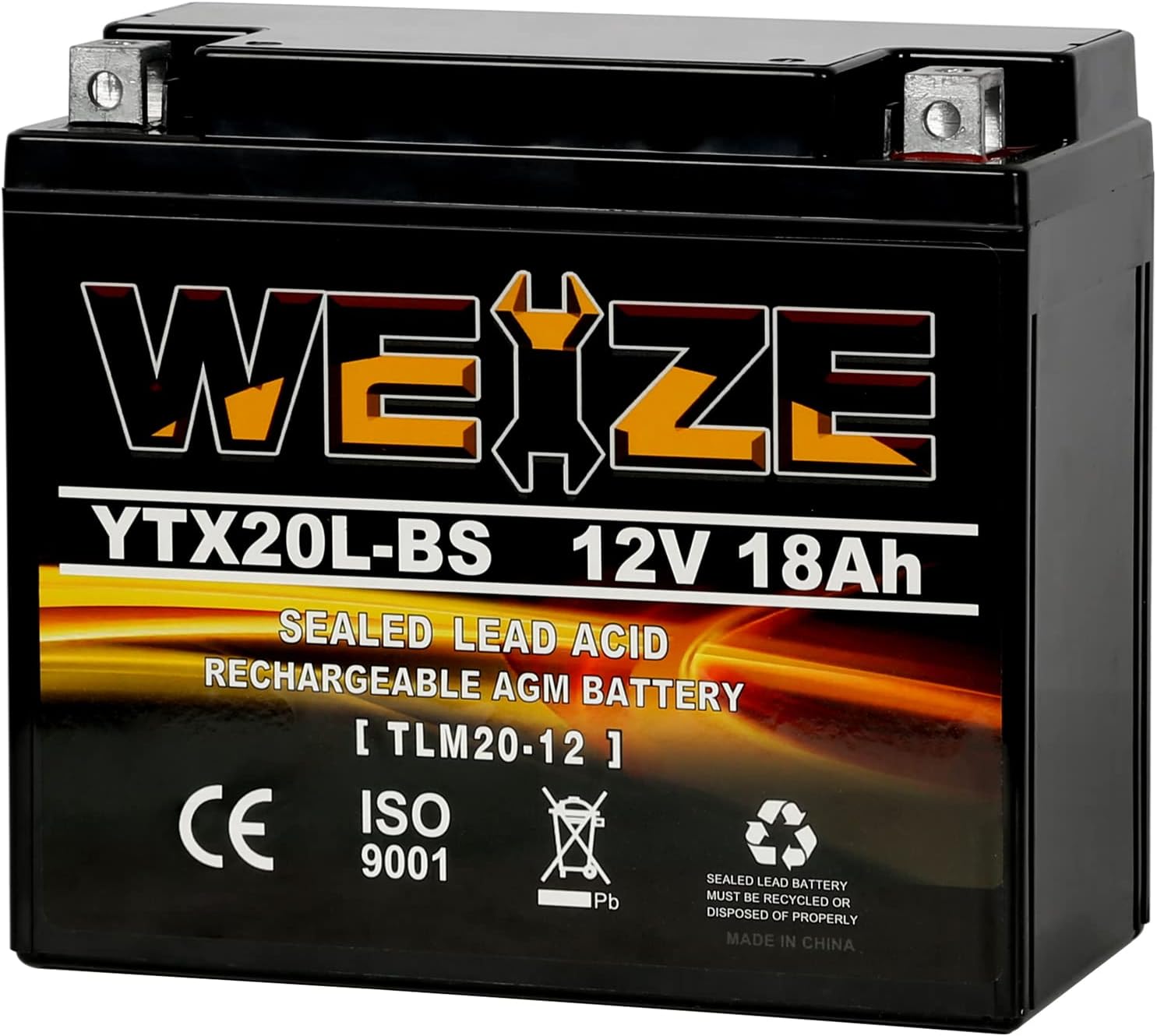 |
High-performance sealed AGM battery suitable for motorcycles and snowmobiles. | View on Amazon |
|
Mighty Max Battery ML-U1-CCAHR  |
Rechargeable SLA AGM battery with 320 CCA, ideal for various powersport applications. | View on Amazon |
|
Battanux 12N9-BS Motorcycle Battery  |
Sealed SLA/AGM battery for ATVs and motorcycles, maintenance-free with advanced technology. | View on Amazon |
Understanding group size codes helps avoid installation errors. For example, Group 24 batteries are commonly used in compact cars, while Group 31 is reserved for heavy-duty trucks. Below is a comparison of common automotive group sizes:
| Group Size | Length (in) | Width (in) | Height (in) |
|---|---|---|---|
| 24 | 10.25 | 6.8 | 8.9 |
| 35 | 9.06 | 6.88 | 8.75 |
| 65 | 12.4 | 7.5 | 7.5 |
Always verify terminal placement variations within the same group. For instance, Group 75 and 78 batteries share similar dimensions but have reversed polarity configurations.
How to Measure Battery Dimensions Manually?
Use calipers or a tape measure to record length, width, and height in inches or millimeters. Note terminal type (top/post vs. side-post) and polarity (+/- orientation). For irregularly shaped batteries, measure the longest points. Compare results to BCI group sizes or manufacturer specs. Example: A 10″ x 5″ x 7″ battery likely corresponds to Group 24.
Can You Use Online Tools to Identify Battery Size?
Yes. Retailers like AutoZone and Advance Auto offer online lookup tools using your vehicle’s make/model/year. For electronics, OEM websites (e.g., Dell, Samsung) provide compatible battery codes. Third-party databases like BatteryJunction.com or PowerStream’s cross-reference tables help match specifications. Always verify results with physical measurements if uncertain.
Modern tools now incorporate AI-driven visual recognition. Some platforms allow users to upload photos of their battery or device compartment to generate size recommendations. For automotive applications, these tools often include:
- Real-time inventory checks at local stores
- Side-by-side comparisons of OEM vs. aftermarket options
- Compatibility filters for modified electrical systems
However, discrepancies can occur with aftermarket modifications or regional variations. Always cross-check tool recommendations against your vehicle’s physical constraints.
What If the Battery Label Is Unreadable?
Cross-reference the battery’s application (vehicle/device model) with OEM specifications. For cars, use VIN decoders or dealership parts databases. Measure voltage (12V for automotive, 3V-9V for electronics) and capacity with a multimeter. Alternatively, visit a retailer for professional testing. Damaged lithium-ion batteries should be handled cautiously due to fire risks.
How Does Battery Chemistry Affect Size Requirements?
Lead-acid (flooded, AGM, gel) batteries are bulkier due to lower energy density. Lithium-ion packs (LiFePO4, NMC) provide higher capacity in smaller sizes. For example, a 100Ah lithium battery is 30-50% smaller than a lead-acid equivalent. Always confirm chemistry compatibility with your device/vehicle to avoid damage from voltage mismatches or charging issues.
Recent advancements in solid-state batteries promise even greater energy density. These experimental units could reduce EV battery sizes by 40% while maintaining range. However, thermal management requirements may offset some space savings. Below shows typical size differences:
| Chemistry | Capacity | Volume |
|---|---|---|
| Lead-Acid | 100Ah | 1.2 cu ft |
| LiFePO4 | 100Ah | 0.7 cu ft |
Marine and RV users often prioritize lithium’s compact size, while automotive starters still rely on lead-acid for cold weather performance.
What Are the Consequences of Using the Wrong Battery Size?
Oversized batteries may not fit compartments, stress mounting hardware, or short-circuit terminals. Undersized units risk poor performance, overheating, and premature failure. Capacity mismatches (e.g., lower CCA) can prevent engine starts in cold weather. Always match group size, voltage, and chemistry to OEM specs unless modifications are professionally endorsed.
“Accurate battery sizing isn’t just about fitment—it’s critical for safety and system longevity. A mismatch in lithium batteries can lead to thermal runaway, while undersized lead-acid units strain charging systems. Always prioritize OEM specifications, especially in EVs where battery management systems are calibrated for precise parameters.” — Senior Engineer, Global Battery Solutions
Conclusion
Determining battery size requires verifying labels, understanding standardization codes, and precise measurement. Cross-referencing tools and professional assistance ensure compatibility, while awareness of chemistry and safety protocols prevents hazards. Regular checks optimize performance across automotive, renewable energy, and portable electronics applications.
FAQs
- How do I check my car battery size without the label?
- Consult your owner’s manual or use online lookup tools with your vehicle’s make, model, and year. Measure the battery compartment dimensions and compare them to BCI group size charts.
- Can I use a higher Ah battery than recommended?
- Yes, if physical size and voltage match OEM requirements. Higher Ah increases capacity but requires compatible charging systems. Avoid in sensitive electronics without professional guidance.
- Does battery size affect charging time?
- Larger capacity (Ah) batteries take longer to charge at the same current. Fast charging requires manufacturer-approved equipment to prevent damage.