Yes, electric bikes are legal on public roads in most U.S. states if they meet federal and local classification standards. Federal law defines e-bikes as bicycles with operable pedals, motors under 750W, and maximum speeds of 20 mph (Class 1/2) or 28 mph (Class 3). States regulate specifics like helmet requirements, age limits, and bike lane access.
How to Prevent Lithium-Ion Battery Fires and Explosions
How Does Federal Law Define Electric Bikes?
The Consumer Product Safety Act classifies e-bikes as bicycles if they have functional pedals, a motor under 750W (1 horsepower), and a top speed ≤20 mph in throttle-only mode (Class 2) or ≤28 mph with pedal assistance (Class 3). This definition exempts them from motorcycle registration/insurance requirements in 44 states adopting the 3-class system.
The three-class system creates distinct operational parameters that impact rider responsibilities. Class 1 e-bikes provide pedal assistance up to 20 mph without throttle capability, making them acceptable in most bike lanes. Class 2 models include throttles but maintain the 20 mph speed ceiling, while Class 3 requires pedal activation but allows 28 mph speeds. Federal regulators emphasize the importance of permanent speed governors – any e-bike allowing modification beyond these limits automatically qualifies as a motor vehicle requiring registration.
Top 5 best-selling Group 14 batteries under $100
| Product Name | Short Description | Amazon URL |
|---|---|---|
|
Weize YTX14 BS ATV Battery  |
Maintenance-free sealed AGM battery, compatible with various motorcycles and powersports vehicles. | View on Amazon |
|
UPLUS ATV Battery YTX14AH-BS  |
Sealed AGM battery designed for ATVs, UTVs, and motorcycles, offering reliable performance. | View on Amazon |
|
Weize YTX20L-BS High Performance 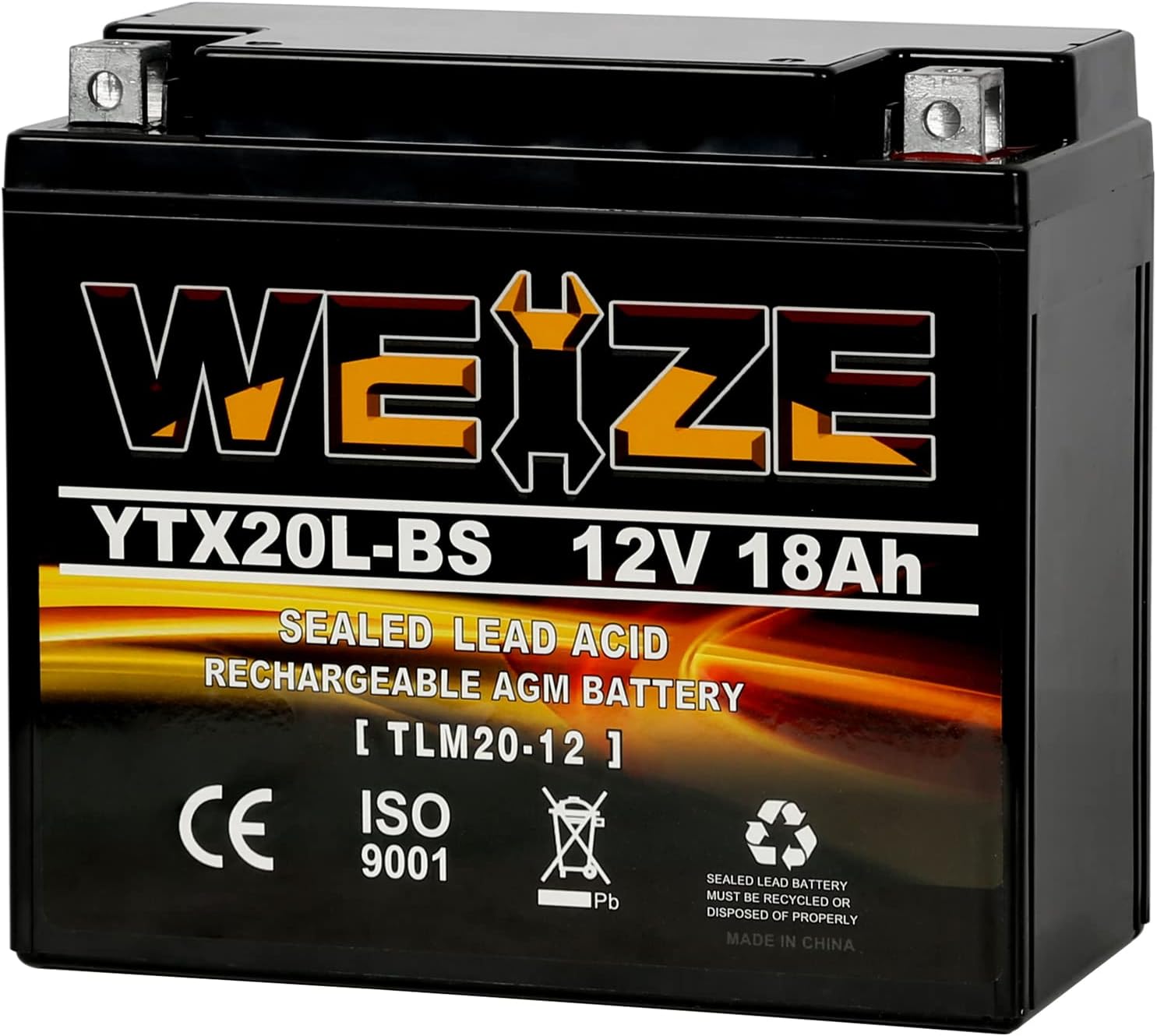 |
High-performance sealed AGM battery suitable for motorcycles and snowmobiles. | View on Amazon |
|
Mighty Max Battery ML-U1-CCAHR  |
Rechargeable SLA AGM battery with 320 CCA, ideal for various powersport applications. | View on Amazon |
|
Battanux 12N9-BS Motorcycle Battery  |
Sealed SLA/AGM battery for ATVs and motorcycles, maintenance-free with advanced technology. | View on Amazon |
| Class | Power Source | Max Speed | Throttle |
|---|---|---|---|
| 1 | Pedal Assist | 20 mph | No |
| 2 | Throttle/Pedal | 20 mph | Yes |
| 3 | Pedal Assist | 28 mph | No |
What Are the Key Differences in State E-Bike Laws?
- California: Class 1/2/3 allowed in bike lanes; Class 3 requires helmets
- New York: No throttle-operated e-bikes on NYC streets without moped registration
- Florida: No age restrictions; treated as standard bicycles
- Colorado: Bans e-bikes from natural surface trails
- Alabama: Requires liability insurance for all e-bikes
When Do E-Bikes Require Helmets or Licenses?
- Riders under 18 (26 states)
- All Class 3 e-bike users (9 states)
- Throttle-operated models (6 states)
Driver’s licenses are rarely required except in states like Tennessee where Class 3 e-bikes need a learner’s permit.
Why Do Pedal-Assist and Throttle Models Have Different Rules?
Throttle-controlled e-bikes (Class 2) face more restrictions because they can move without pedaling, which regulators associate with higher collision risks. Pedal-assist models (Class 1/3) are often permitted in bicycle infrastructure due to their speed-governed operation. New Jersey and Georgia ban throttle systems on roadways entirely.
Where Can E-Bikes Operate: Roadways vs Bike Lanes?
38 states allow Class 1 e-bikes anywhere traditional bikes go. Class 3 models face bike lane bans in urban areas like Chicago and Boston. Federal guidance prohibits all e-bikes on sidewalks in business districts. Shared-use paths often restrict motor output to 250W – below the federal 750W standard.
Jurisdictional boundaries create complex riding environments. For example, Portland’s waterfront trails permit Class 1 e-bikes but prohibit them from overtaking pedestrians. Mountain towns like Park City, Utah enforce seasonal restrictions on motorized trail access. Urban centers increasingly implement geofencing technology that automatically reduces e-bike speeds in crowded areas through GPS-based speed limiting.
| Location Type | Class 1 | Class 2 | Class 3 |
|---|---|---|---|
| Protected Bike Lanes | Allowed | Restricted in 12 states | Banned in cities |
| Multi-Use Paths | Permitted | 38 states allow | Prohibited |
| Roadways | All states | 34 states | Require bike lane use |
“The patchwork of state e-bike laws creates compliance challenges for riders and law enforcement. We need federal standardization for helmet rules, power limits, and infrastructure access. Current regulations don’t account for advances in battery efficiency and torque sensors that make modern e-bikes safer than early models.” – Michael Tanaka, Transportation Safety Board Advisor
Conclusion
E-bike legality hinges on understanding three variables: your state’s classification system, the bike’s technical specifications, and local traffic ordinances. Always verify maximum speed settings, helmet mandates, and access rules for your riding areas. As legislation evolves, joining advocacy groups like PeopleForBikes can help shape rider-friendly laws.
FAQs
- Do I Need Insurance for a 750W E-Bike?
- Only 6 states require liability insurance, primarily for throttle-based models. Homeowner’s policies often cover e-bike theft/damage.
- Can Police Check My E-Bike’s Speed Settings?
- Yes. Officers in restrictive states like Pennsylvania use GPS-enabled speed logs and wattage testers during traffic stops.
- Are E-Bikes Allowed on National Park Trails?
- Since 2022, the National Park Service permits Class 1 e-bikes on bike trails unless locally prohibited. Throttle models remain banned.