AGM (Absorbent Glass Mat) batteries differ from flooded, gel, and lithium-ion batteries in construction, performance, and maintenance. They use fiberglass mats to hold electrolytes, offering spill-proof operation, faster charging, and vibration resistance. Unlike flooded batteries, AGM batteries require no water refilling and outperform gel batteries in cold weather. Lithium-ion batteries, while lighter, lack AGM’s deep-cycle durability and cost-effectiveness for certain applications.
How to Prevent Lithium-Ion Battery Fires and Explosions
How Does AGM Battery Technology Work?
AGM batteries use tightly packed fiberglass separators to absorb electrolytes, creating a oxygen-recombination cycle that minimizes water loss. This sealed design prevents leaks, allows flexible mounting, and delivers high current output. Compared to flooded batteries, AGM’s low internal resistance enables faster charging and deeper discharges without sulfation damage.
The fiberglass mat structure creates 95-97% electrolyte saturation, allowing efficient ion transfer between plates. During charging, oxygen gas produced at the positive plate migrates to the negative plate, recombining with hydrogen to form water. This closed-loop system reduces water loss to 1/1000th of flooded battery rates. Advanced AGM designs incorporate carbon additives to prevent stratification and extend cycle life in partial-state-of-charge applications like start-stop vehicles.
Top 5 best-selling Group 14 batteries under $100
| Product Name | Short Description | Amazon URL |
|---|---|---|
|
Weize YTX14 BS ATV Battery  |
Maintenance-free sealed AGM battery, compatible with various motorcycles and powersports vehicles. | View on Amazon |
|
UPLUS ATV Battery YTX14AH-BS  |
Sealed AGM battery designed for ATVs, UTVs, and motorcycles, offering reliable performance. | View on Amazon |
|
Weize YTX20L-BS High Performance 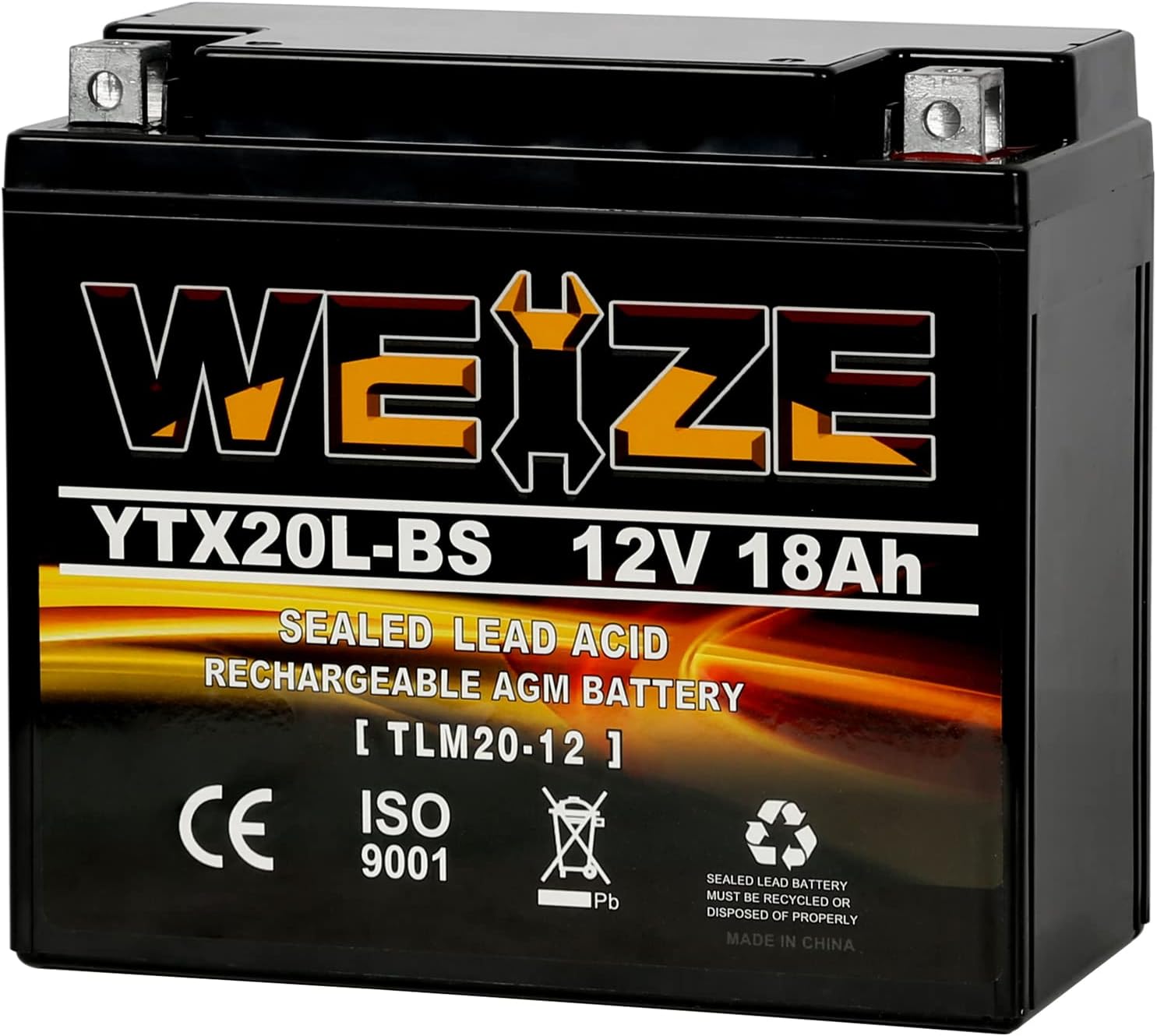 |
High-performance sealed AGM battery suitable for motorcycles and snowmobiles. | View on Amazon |
|
Mighty Max Battery ML-U1-CCAHR  |
Rechargeable SLA AGM battery with 320 CCA, ideal for various powersport applications. | View on Amazon |
|
Battanux 12N9-BS Motorcycle Battery  |
Sealed SLA/AGM battery for ATVs and motorcycles, maintenance-free with advanced technology. | View on Amazon |
What Are the Advantages of AGM Over Flooded Lead-Acid Batteries?
AGM batteries outperform flooded counterparts with maintenance-free operation, 2-3x longer cycle life, and 40% faster recharge rates. Their spill-proof design makes them ideal for marine/RV use, while vibration resistance suits off-grid solar systems. Unlike flooded batteries, AGM models lose only 1-3% charge monthly versus 5-20%, reducing energy waste in storage.
Key performance differences become evident in demanding conditions. AGM batteries maintain 85% capacity at -22°F versus 50% for flooded types. Their sealed construction prevents acid spills during 45° tilts, crucial for off-road vehicles. A comparative analysis reveals:
| Parameter | AGM | Flooded |
|---|---|---|
| Cycle Life @ 50% DoD | 600-1200 | 200-500 |
| Charge Acceptance | 5C rate | 0.3C rate |
| Maintenance Interval | Never | Monthly |
Which Applications Benefit Most From AGM Batteries?
AGM batteries dominate in marine (33% market share), emergency lighting (28%), and telecom backup systems (19%). Their vibration resistance makes them preferred for military vehicles and construction equipment. Solar installations use AGM for 80% depth-of-discharge capability versus 50% in flooded models. They’re also growing in medical device markets, valued at $1.2B annually for reliable power in MRI backup systems.
Recent industry surveys show 78% of marine manufacturers now specify AGM as standard equipment. In renewable energy systems, AGM’s tolerance for partial charging makes it ideal for wind/solar hybrids where consistent charging isn’t guaranteed. Data centers increasingly deploy AGM arrays for UPS systems, appreciating their 15-year float life and zero ventilation requirements compared to flooded alternatives.
“AGM technology bridges the gap between traditional lead-acid and advanced lithium systems. While lithium dominates EVs, AGM maintains 62% market share in marine applications due to its safety profile and temperature tolerance. The real innovation lies in AGM’s hybrid capability – it can be paired with lithium in hybrid systems to leverage both technologies’ strengths.” – Dr. Elena Torres, Battery Systems Engineer
FAQs
- Can AGM Batteries Replace Flooded Batteries Directly?
- Yes, but ensure charging systems support AGM’s voltage requirements (14.4-14.6V absorption). Retrofit applications may need voltage regulator adjustments to prevent under/overcharging.
- Do AGM Batteries Require Special Maintenance?
- No routine watering needed, but clean terminals quarterly and perform equalization charges annually. Store at 50-80% charge in temperatures below 95°F for optimal longevity.
- How Long Do AGM Batteries Typically Last?
- Service life ranges 4-7 years in cyclic use (600-1200 cycles) and 8-12 years in float applications. Lifespan decreases 30% for every 15°F above 77°F ambient temperature.