Short Answer: A marine battery typically requires 400–1,000 Cold Cranking Amps (CCA) depending on boat size, engine type, and climate. Larger engines or colder environments demand higher CCA. Dual-purpose batteries balancing CCA and deep-cycle capacity are ideal for marine use. Always check your engine manufacturer’s specifications for precise requirements.
How to Prevent Lithium-Ion Battery Fires and Explosions
How Is CCA Defined for Marine Batteries?
CCA (Cold Cranking Amps) measures a battery’s ability to start an engine at 0°F (-18°C) for 30 seconds while maintaining voltage above 7.2V. For marine batteries, this metric ensures reliable ignition in cold conditions. Unlike automotive batteries, marine CCA must also account for humidity, vibration, and intermittent usage patterns common in boating.
What Factors Determine the Right CCA for Your Boat?
Key factors include engine displacement (larger engines need higher CCA), ambient temperature (colder climates require 20%–30% higher CCA), and electrical load (e.g., fishfinders, GPS). Twin-engine setups may need dual batteries with 800–1,200 CCA combined. Always prioritize a 10%–20% CCA buffer above manufacturer recommendations for safety.
Top 5 best-selling Group 14 batteries under $100
| Product Name | Short Description | Amazon URL |
|---|---|---|
|
Weize YTX14 BS ATV Battery  |
Maintenance-free sealed AGM battery, compatible with various motorcycles and powersports vehicles. | View on Amazon |
|
UPLUS ATV Battery YTX14AH-BS  |
Sealed AGM battery designed for ATVs, UTVs, and motorcycles, offering reliable performance. | View on Amazon |
|
Weize YTX20L-BS High Performance 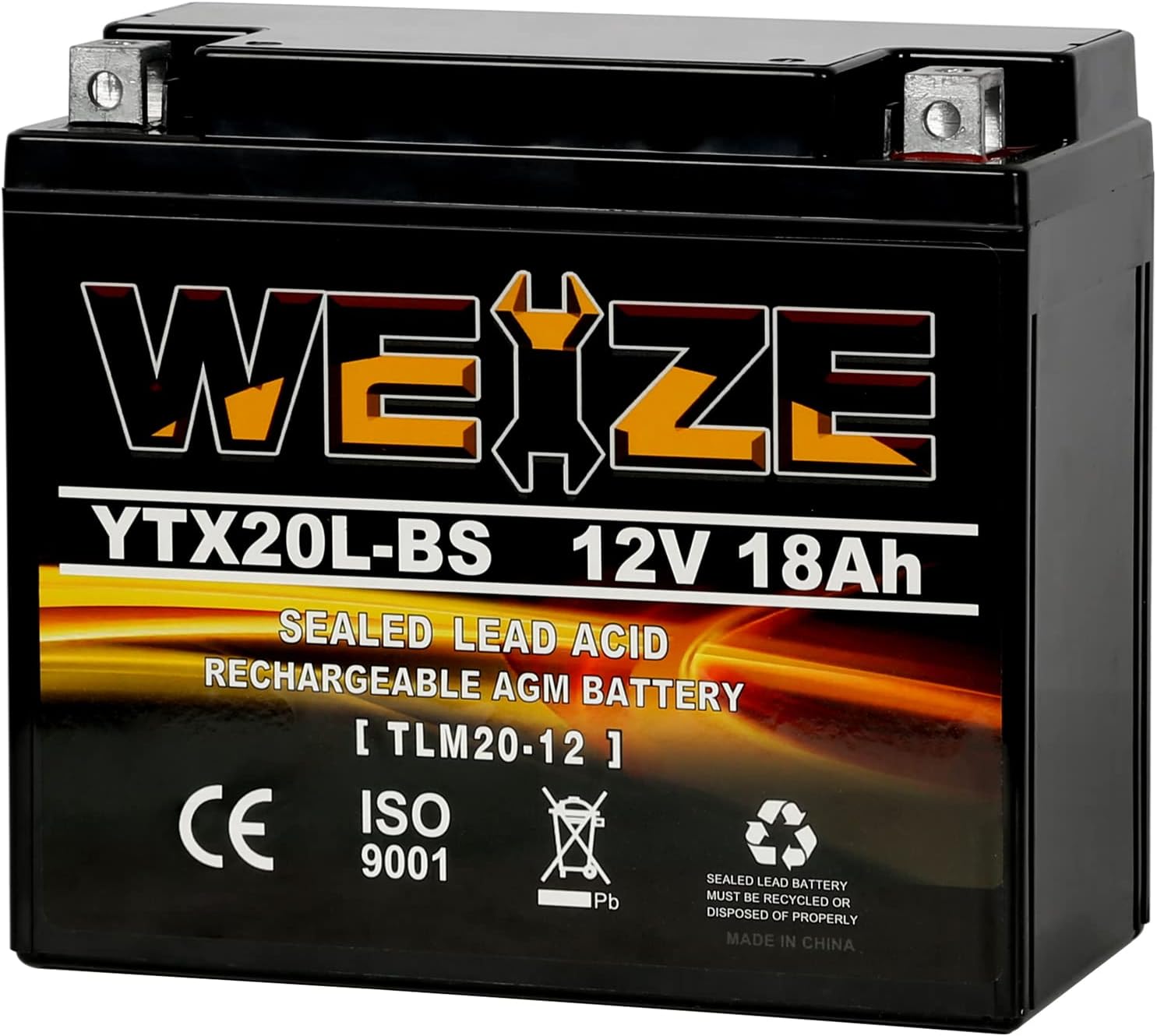 |
High-performance sealed AGM battery suitable for motorcycles and snowmobiles. | View on Amazon |
|
Mighty Max Battery ML-U1-CCAHR  |
Rechargeable SLA AGM battery with 320 CCA, ideal for various powersport applications. | View on Amazon |
|
Battanux 12N9-BS Motorcycle Battery  |
Sealed SLA/AGM battery for ATVs and motorcycles, maintenance-free with advanced technology. | View on Amazon |
Engine displacement directly correlates with CCA needs. A 4-cylinder outboard typically requires 400-600 CCA, while V8 inboards often demand 800+ CCA. Consider secondary systems like windlasses or thrusters that draw power during startup. For boats with complex electrical systems, use this formula: (Base Engine CCA) + (0.3 x Accessory Load Amps) = Minimum Recommended CCA. Always verify against these common configurations:
| Engine Type | Recommended CCA |
|---|---|
| Single Outboard (≤150HP) | 500-700 |
| Twin Inboards | 900-1,200 |
| Diesel Auxiliary | 800-1,000 |
Why Does Marine CCA Differ from Automotive Standards?
Marine batteries endure harsher conditions: constant vibration, moisture, and deeper discharge cycles. The SAE J537 standard for marine CCA includes rigorous vibration testing absent in automotive standards. Additionally, marine batteries often merge starting and deep-cycle capabilities, unlike single-purpose automotive batteries.
How Do Temperature Extremes Affect CCA Requirements?
CCA drops 35% at 0°F compared to 80°F. In sub-freezing climates, opt for batteries with 20%–35% higher CCA than your engine’s baseline. Conversely, in tropical regions, MCA (Marine Cranking Amps) becomes critical, as it’s measured at 32°F (0°C) and better reflects warm-weather performance.
Battery chemistry reacts differently to temperature extremes. Lead-acid batteries lose 0.6% CCA per 1°F below 32°F, while AGM batteries maintain better performance with only 0.4% loss. In Arctic conditions, consider these adjustments:
| Temperature Range | CCA Multiplier |
|---|---|
| 32°F to 0°F | 1.2x Base CCA |
| -20°F to 0°F | 1.35x Base CCA |
| Above 80°F | Use MCA Rating |
Lithium-ion batteries outperform traditional options in cold, retaining 85% CCA at -4°F versus 50% for AGM. However, their higher upfront cost requires careful cost-benefit analysis for seasonal boaters.
Can Lithium-Ion Batteries Revolutionize Marine CCA?
Lithium-ion marine batteries provide 1.5–2x the CCA of lead-acid equivalents at half the weight. A 100Ah lithium battery often delivers 1,000–1,200 CCA versus 600–800 CCA for AGM. Their flat discharge curve maintains stable voltage even below 20% charge, making them ideal for cold starts and accessory loads.
What Are the Risks of Using Insufficient CCA?
Low CCA causes slow cranking, failed starts, and voltage drops that strain alternators. Chronic underpowering reduces battery life by 40%–60% due to sulfation. In emergencies, inadequate CCA may prevent bilge pump operation during flooding. Always match CCA to the worst-case scenario, not average conditions.
“Modern marine systems demand CCA that accounts for both starting surges and house loads. We’re seeing a 30% industry shift toward lithium hybrids offering 1,000+ CCA with 3x cycle life. For lead-acid holdouts, AGM batteries with 800–900 CCA remain the safest bet for saltwater applications.” – Marine Power Systems Engineer
Conclusion
Selecting marine battery CCA requires balancing engine specs, climate, and onboard electronics. While 600–800 CCA suits most single-engine boats, lithium solutions now push boundaries with compact high-power designs. Regular load testing ensures CCA retention—critical for safety in marine environments.
FAQs
- Does higher CCA damage marine engines?
- No. Marine engines only draw required amperage. Excess CCA provides reserve power for accessories.
- Can I mix CCA ratings in dual-battery setups?
- Avoid mixing. Uneven CCA causes imbalanced charging and reduces total system lifespan by up to 45%.
- How often should CCA be tested?
- Test CCA every 60 days during peak season. A 15% drop from rated CCA signals replacement need.