What determines battery capacity? Battery capacity is measured in amp hours (Ah), representing the energy a battery can deliver over time. Higher Ah ratings mean longer runtime. Key factors include chemical composition, temperature, discharge rates, and battery age. For example, a 100Ah battery can theoretically provide 5 amps for 20 hours before depleting.
How to Prevent Lithium-Ion Battery Fires and Explosions
How Do Amp Hours Define Battery Capacity?
Amp hours quantify a battery’s energy storage capacity by measuring current delivery over time. A 20Ah battery can supply 20 amps for 1 hour or 2 amps for 10 hours. This metric is crucial for comparing batteries in solar systems, EVs, and portable electronics, though real-world performance varies with load demands and environmental conditions.
In practical applications, the relationship between amp hours and device power consumption becomes critical. A 100Ah marine battery powering a 10A trolling motor demonstrates this relationship: 100Ah ÷ 10A = 10 hours theoretical runtime. However, factors like wave resistance and motor efficiency typically reduce actual use time by 20-30%. Industrial applications require more complex calculations – data center UPS systems often combine multiple battery banks using parallel configurations to achieve required amp hour capacities while maintaining voltage stability.
Top 5 best-selling Group 14 batteries under $100
| Product Name | Short Description | Amazon URL |
|---|---|---|
|
Weize YTX14 BS ATV Battery  |
Maintenance-free sealed AGM battery, compatible with various motorcycles and powersports vehicles. | View on Amazon |
|
UPLUS ATV Battery YTX14AH-BS  |
Sealed AGM battery designed for ATVs, UTVs, and motorcycles, offering reliable performance. | View on Amazon |
|
Weize YTX20L-BS High Performance 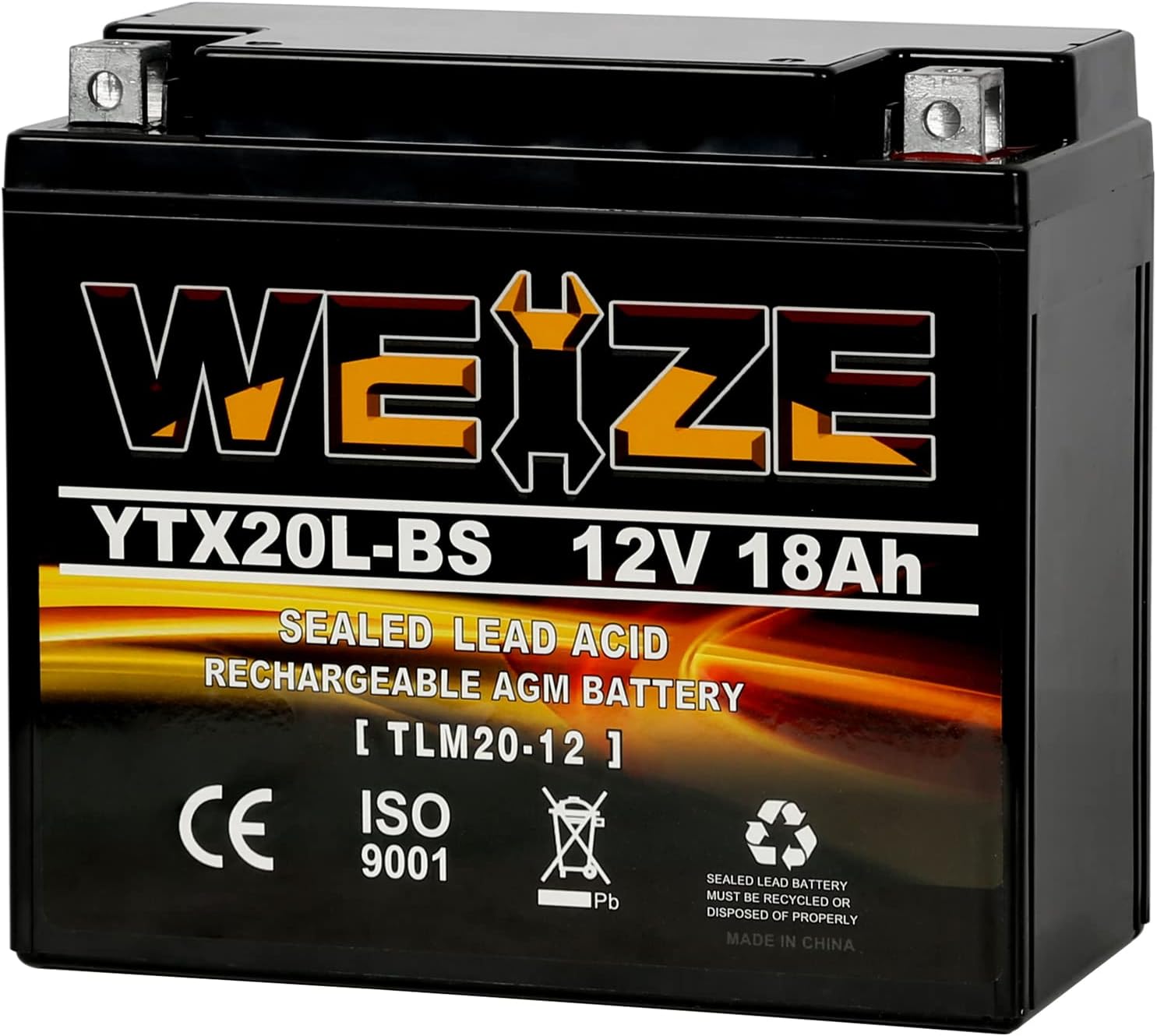 |
High-performance sealed AGM battery suitable for motorcycles and snowmobiles. | View on Amazon |
|
Mighty Max Battery ML-U1-CCAHR  |
Rechargeable SLA AGM battery with 320 CCA, ideal for various powersport applications. | View on Amazon |
|
Battanux 12N9-BS Motorcycle Battery  |
Sealed SLA/AGM battery for ATVs and motorcycles, maintenance-free with advanced technology. | View on Amazon |
| Battery Type | Typical Ah Range | Common Applications |
|---|---|---|
| AA Alkaline | 2.4-3.0Ah | Consumer electronics |
| Car Battery | 40-100Ah | Vehicle starting systems |
| Solar Deep Cycle | 100-400Ah | Renewable energy storage |
Why Do Temperature Fluctuations Alter Effective Battery Capacity?
Lithium-ion batteries lose 15-25% capacity at -20°C, while lead-acid efficiency drops 40% below 0°C. High temperatures above 45°C accelerate chemical degradation, permanently reducing capacity. Battery management systems (BMS) mitigate thermal impacts through heating/cooling mechanisms and charge rate adjustments. Always consult manufacturer specs for temperature compensation requirements.
The thermal effects on battery capacity follow an exponential relationship rather than linear progression. Between 20°C and 35°C, most batteries operate within 5% of rated capacity. Below freezing, lead-acid batteries experience electrolyte thickening that impedes ion transfer, while lithium-ion cells face metallic plating risks during charging. Automotive engineers address this through insulated battery enclosures and active thermal management systems. In extreme environments like Arctic research stations, battery banks are often housed in temperature-controlled compartments with redundant heating elements to maintain optimal operating conditions.
| Temperature | Li-ion Capacity | Lead-Acid Capacity |
|---|---|---|
| -20°C | 75-85% | 40-50% |
| 0°C | 90-95% | 60-70% |
| 25°C | 100% | 100% |
| 45°C | 95%* | 85%* |
*Permanent capacity loss occurs at elevated temperatures
What Mathematical Formula Converts Amp Hours to Watt Hours?
Watt hours (Wh) = Amp hours (Ah) × Voltage (V). This conversion reveals total energy storage. A 12V 100Ah battery stores 1,200Wh. This calculation helps compare batteries with different voltages, like lithium-ion (3.7V/cell) versus lead-acid (12V). Always factor in depth of discharge limits—lead-acid batteries typically only use 50% of rated capacity for longevity.
How Do Discharge Rates Affect Amp Hour Ratings?
The Peukert Effect demonstrates how high current draws reduce effective capacity. A 100Ah lead-acid battery discharged at 20A might only deliver 80Ah. Lithium batteries maintain 95%+ capacity across various rates. Always check C-rating: a 0.2C rate on 100Ah battery means 20A max continuous draw. Manufacturers use 20-hour rates for lead-acid vs 1-hour rates for lithium comparisons.
What Distinguishes Reserve Capacity from Amp Hour Ratings?
Reserve capacity (RC) measures minutes a battery can deliver 25A at 80°F before dropping below 10.5V. A 180 RC equals roughly 75Ah. This automotive-focused metric better reflects real-world starter battery performance, while Ah ratings suit deep-cycle applications. Conversion formula: Ah ≈ (RC × 25) / 60.
Can You Compare Lithium and Lead-Acid Batteries Using Amp Hours?
Direct Ah comparisons mislead due to lithium’s 90%+ depth of discharge versus lead-acid’s 50%. A 100Ah lithium battery effectively provides 90Ah vs 50Ah from lead-acid. Add 3x cycle life and 50% weight reduction, and lithium achieves 540% better lifetime capacity per kg. Always compare total accessible energy (Ah × DoD) rather than raw ratings.
How Does Battery Chemistry Impact Amp Hour Density?
Energy density comparisons: Lithium NMC (150-200Wh/kg), LFP (90-120Wh/kg), Lead-acid (30-50Wh/kg). Nickel-based batteries offer 80Wh/kg but suffer memory effect. New solid-state prototypes achieve 500Wh/kg. Chemical stability determines charge rates – lithium accepts 1C (full charge in 1 hour) vs lead-acid’s 0.2C maximum. Safety tradeoffs: LFP lithium resists thermal runaway better than NMC formulations.
“Modern battery management systems have revolutionized capacity utilization. We’re now achieving 99% charge efficiency in LFP systems compared to 85% in traditional lead-acid. The real breakthrough isn’t in raw amp hours, but in accessible, stable energy delivery across wider temperature ranges.” – Dr. Elena Voss, Electrochemical Storage Solutions
Conclusion
Amp hours provide foundational understanding of battery capacity, but true performance analysis requires examining discharge rates, temperature effects, and chemistry-specific characteristics. With emerging technologies like silicon-anode lithium and solid-state batteries promising 50% capacity improvements by 2025, users must balance current needs with future-proof energy strategies.
FAQs
- How long will 200Ah battery last?
- A 200Ah battery powering a 400W load at 12V lasts approximately 6 hours (200Ah × 12V = 2,400Wh; 2,400Wh ÷ 400W = 6h). Factor in 80% depth of discharge for lead-acid: 4.8 hours. Lithium batteries maintain full capacity through discharge cycle.
- Do higher amp hours mean more power?
- Higher Ah indicates greater energy storage, not power. Power (watts) = voltage × current. A 12V 100Ah battery stores same energy as 24V 50Ah system (1,200Wh), but 24V system delivers higher power at equivalent current.
- How to calculate battery runtime?
- Runtime (hours) = (Ah × V × DoD) ÷ Load (W). Example: 100Ah 12V lithium (100% DoD) powering 60W fridge: (100×12×1)/60 = 20 hours. Real-world derate by 15% for conversion losses: 17 hours.