Proper cable sizing and fuse selection for lithium batteries require calculating maximum current loads, understanding voltage drop limitations, and matching protection devices to battery specifications. Key factors include cable material conductivity, ambient temperature effects, and compliance with NEC/ABYC safety standards. Undersized cables risk fire hazards, while incorrect fuses may fail to prevent thermal runaway in lithium-ion systems.
How to Prevent Lithium-Ion Battery Fires and Explosions
What Factors Determine Lithium Battery Cable Size Requirements?
Cable sizing depends on continuous current draw, peak surge currents, and voltage drop limits (typically 3% maximum). Lithium batteries’ low internal resistance enables higher current flows than lead-acid systems, necessitating larger conductor sizes. The National Electrical Code (NEC) Table 310.16 provides ampacity guidelines, but lithium systems often require derating factors for thermal management in confined spaces.
How to Calculate Voltage Drop for Battery Cable Runs?
Use the formula: Voltage Drop = (2 × L × I × R) / 1000, where L=length in feet, I=current in amps, R=conductor resistance (Ω/kft). For 48V lithium systems, maintain under 1.44V total drop at full load. Example: 20ft run at 100A requires 2/0 AWG cable (0.079Ω/kft) for 0.95V drop (1.98% of 48V).
Top 5 best-selling Group 14 batteries under $100
| Product Name | Short Description | Amazon URL |
|---|---|---|
|
Weize YTX14 BS ATV Battery  |
Maintenance-free sealed AGM battery, compatible with various motorcycles and powersports vehicles. | View on Amazon |
|
UPLUS ATV Battery YTX14AH-BS  |
Sealed AGM battery designed for ATVs, UTVs, and motorcycles, offering reliable performance. | View on Amazon |
|
Weize YTX20L-BS High Performance 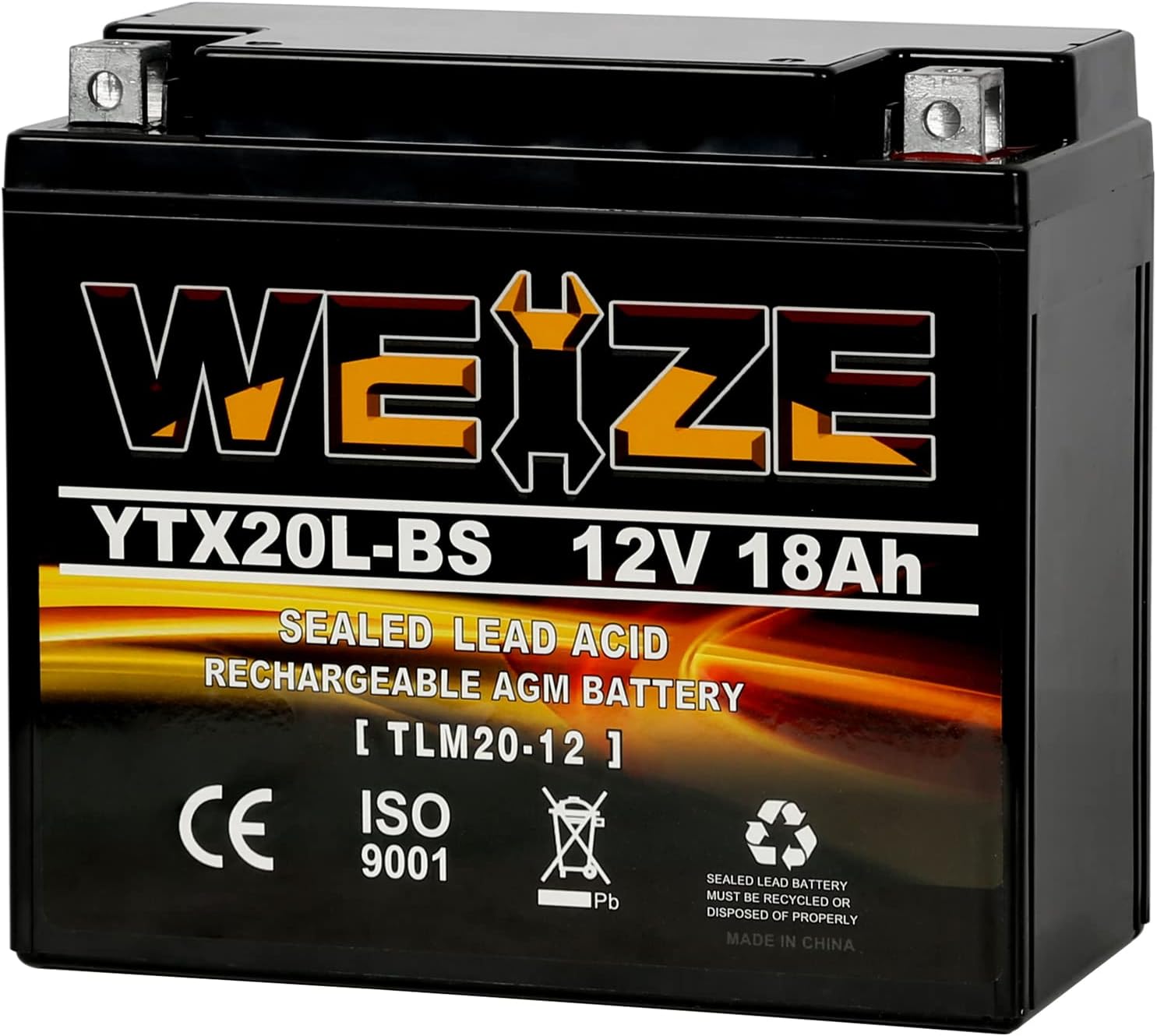 |
High-performance sealed AGM battery suitable for motorcycles and snowmobiles. | View on Amazon |
|
Mighty Max Battery ML-U1-CCAHR  |
Rechargeable SLA AGM battery with 320 CCA, ideal for various powersport applications. | View on Amazon |
|
Battanux 12N9-BS Motorcycle Battery  |
Sealed SLA/AGM battery for ATVs and motorcycles, maintenance-free with advanced technology. | View on Amazon |
When planning long cable runs, consider using multiple parallel conductors to reduce overall resistance. For critical applications like medical equipment or telecommunications backup, aim for 1% voltage drop instead of 3%. Below is a quick reference table for common lithium battery voltages:
| System Voltage | Max Allowable Drop (3%) | Recommended AWG for 100A/50ft |
|---|---|---|
| 12V | 0.36V | 4/0 |
| 24V | 0.72V | 2/0 |
| 48V | 1.44V | 4 |
Why Does Fuse Selection Differ for Lithium vs Lead-Acid Batteries?
Lithium batteries have faster discharge rates and lower internal resistance, creating higher short-circuit currents. Select fuses with AIC ratings exceeding 10kA for large lithium banks. Time-current characteristics must account for lithium’s flat discharge curve – Class T or NH fuses outperform standard ANL types in clearing faults before catastrophic thermal runaway occurs.
The internal chemistry of lithium-ion cells requires faster-acting protection devices. While lead-acid batteries typically allow 5-10 seconds for fault clearance, lithium systems need fuses that can interrupt current within 0.1 seconds during severe short circuits. Always verify fuse certifications meet UL 248-14 standards specifically for lithium battery applications, and consider using dual protection with both internal BMS and external fusing.
What Are Common Mistakes in DIY Lithium Battery Wiring?
Top errors include: 1) Using automotive cables rated for intermittent use 2) Ignoring terminal temperature rise 3) Mixing conductor materials 4) Overlooking pulse current requirements 5) Improper fuse coordination between battery and inverter. Marine survey reports show 68% of lithium system failures stem from cable/fuse mismatches rather than battery defects.
How Does Ambient Temperature Affect Conductor Sizing?
Cable ampacity decreases 0.5% per °F above 86°F. Lithium battery compartments often reach 122°F, requiring 20% larger conductors. Use XHHW-2 or MTW insulation rated for 90°C minimum. In solar applications, rooftop conduit temperatures may hit 158°F – derate cables to 60% of NEC table values and consider active cooling for long runs.
What Role Does BMS Integration Play in Circuit Protection?
Modern Battery Management Systems (BMS) coordinate with fuses through programmable trip curves. Smart BMS can predict fault conditions using impedance spectroscopy, triggering MOSFET disconnects before fuses blow. This layered protection requires fuse time-delay characteristics 25% slower than BMS response to avoid nuisance tripping while maintaining UL 1973 safety compliance.
How to Future-Proof Cable Runs for Battery Expansion?
Design for 125% of current maximum load – 4/0 AWG instead of 2/0 for 200A systems allows parallel battery additions. Install conduit with 40% spare capacity, using pull strings for future upgrades. For marine installations, use tinned copper with 300V insulation rating despite 48V systems, anticipating potential transition to 800V battery architectures.
“Lithium battery cable sizing isn’t just about ampacity charts – it’s about understanding dynamic load profiles. We’ve seen 200% current spikes in EV conversions lasting 500ms that melt undersized cables despite ‘adequate’ RMS ratings. Always analyze your specific application’s duty cycle before finalizing wire gauges.”
– Michael Tanaka, Senior Engineer at Electrifi Power Systems
Proper cable and fuse selection forms the critical safety backbone of lithium battery installations. By accounting for lithium’s unique characteristics, environmental factors, and future expansion needs, installers can create robust power systems that maximize performance while meeting stringent safety standards. Always verify designs with professional engineers and utilize UL-listed components for insurance-compliant installations.
FAQs
- Can I Use Automotive Cable for Lithium Battery Banks?
- No. SAE J1127 cables are rated for 105°C and intermittent use, while lithium systems require 125°C-rated continuous-use wiring meeting UL 1426 standards. Marine-grade ABYC-compliant cables provide better corrosion resistance.
- How Often Should Fuses Be Tested in Lithium Systems?
- Perform annual resistance checks using milliohm meters. Replace fuses showing 15% increased resistance from baseline. Cycling fuses more than 50 times requires replacement even if not blown, as contact degradation increases failure risk.
- Does Parallel Battery Configurations Change Fuse Requirements?
- Yes. Each parallel branch needs individual fusing at 125% of branch current. Main fuse should be 150% of total parallel current sum. Use identical cable lengths and fuse types to prevent current imbalance exceeding 5% between branches.