CCA (Cold Cranking Amps) measures a battery’s ability to start an engine at 0°F (-18°C), while MCA (Marine Cranking Amps) tests performance at 32°F (0°C). CCA is critical for cold climates, whereas MCA applies to marine/mild-weather use. Choosing the right rating depends on climate and application to ensure optimal battery performance and longevity.
What Is a Group Size 24 Battery?
What Is Cold Cranking Amps (CCA)?
CCA quantifies a battery’s capacity to deliver 30 seconds of sustained power at 0°F without dropping below 7.2 volts. It’s vital for vehicles in freezing climates, ensuring reliable starts. For example, a 600 CCA battery can supply 600 amps under these conditions. Manufacturers test this using SAE J537 standards, emphasizing cold-weather resilience.
What Is Marine Cranking Amps (MCA)?
MCA measures a battery’s 30-second output at 32°F, maintaining 1.2 volts per cell. Designed for boats and moderate climates, MCA ratings are typically 25-30% higher than CCA for the same battery. This metric prioritizes marine engines’ higher cranking demands and accounts for warmer operating environments compared to automotive use.
Top 5 best-selling Group 14 batteries under $100
| Product Name | Short Description | Amazon URL |
|---|---|---|
|
Weize YTX14 BS ATV Battery  |
Maintenance-free sealed AGM battery, compatible with various motorcycles and powersports vehicles. | View on Amazon |
|
UPLUS ATV Battery YTX14AH-BS  |
Sealed AGM battery designed for ATVs, UTVs, and motorcycles, offering reliable performance. | View on Amazon |
|
Weize YTX20L-BS High Performance 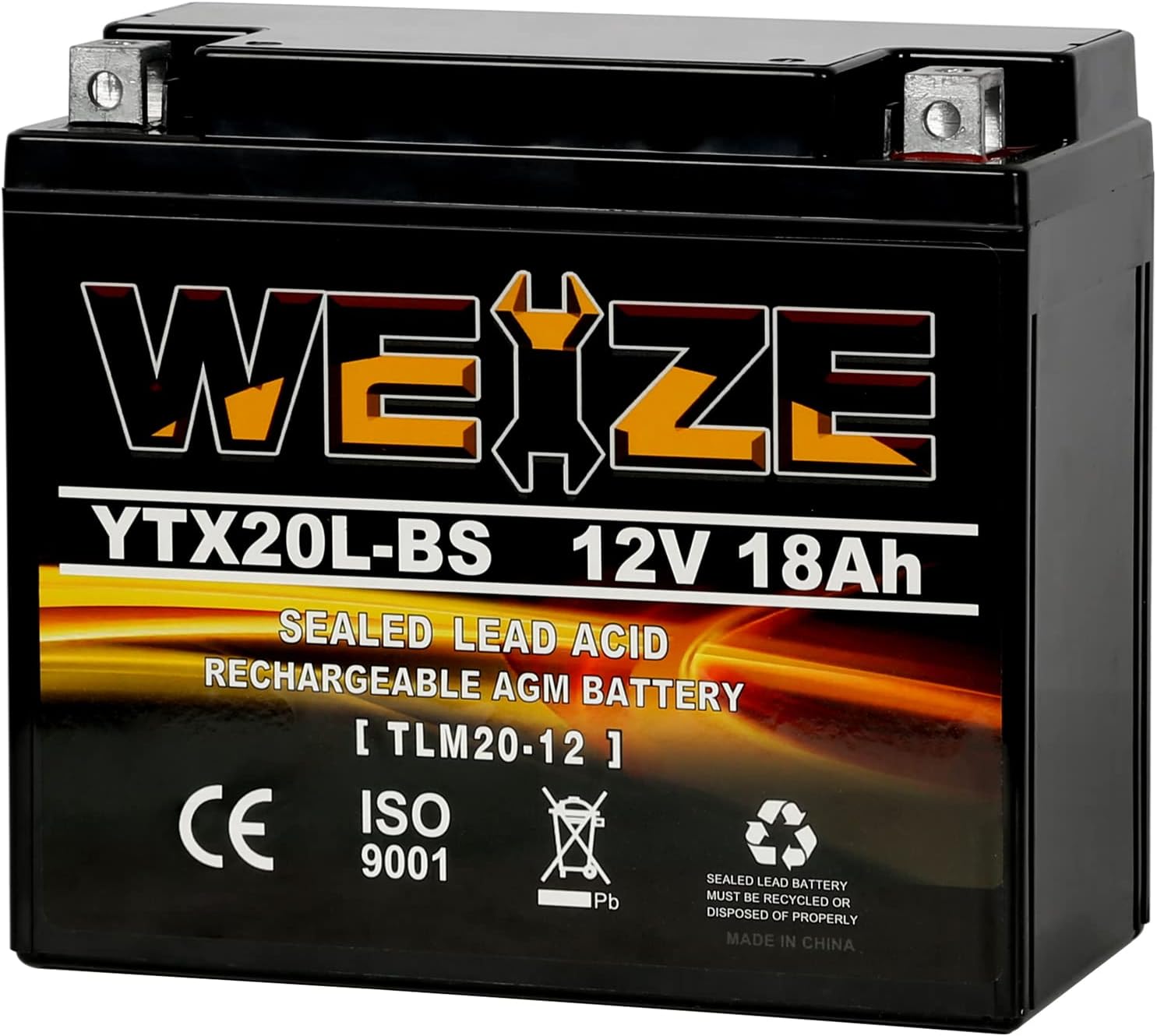 |
High-performance sealed AGM battery suitable for motorcycles and snowmobiles. | View on Amazon |
|
Mighty Max Battery ML-U1-CCAHR  |
Rechargeable SLA AGM battery with 320 CCA, ideal for various powersport applications. | View on Amazon |
|
Battanux 12N9-BS Motorcycle Battery  |
Sealed SLA/AGM battery for ATVs and motorcycles, maintenance-free with advanced technology. | View on Amazon |
How Do CCA and MCA Affect Battery Selection?
Select batteries with higher CCA in sub-zero regions to prevent hard starts. Marine/RV applications require MCA-focused batteries for consistent performance in variable temperatures. Using CCA-rated batteries in boats may lead to underperformance, while MCA batteries in Arctic conditions risk voltage drops. Always match ratings to the manufacturer’s specifications and regional climate patterns.
Why Are Temperature Ratings Critical for CCA and MCA?
Battery chemistry slows in cold, reducing electron flow. CCA’s 0°F benchmark reflects real-world winter stress, while MCA’s 32°F standard aligns with marine environments. At -20°F, a 500 CCA battery may drop to 300 effective amps. Temperature directly impacts internal resistance, making accurate ratings essential for avoiding failure during extreme weather events.
Lead-acid batteries experience a 35% reduction in available power for every 15°F below 32°F. This exponential loss explains why CCA ratings use stricter voltage thresholds. Marine batteries face different challenges – higher humidity accelerates corrosion, and constant vibration in boats requires thicker plates that perform better at moderate temperatures. The table below shows how temperature impacts two identical batteries with 600 CCA/750 MCA ratings:
| Temperature | Effective CCA | Effective MCA |
|---|---|---|
| 32°F (0°C) | 570 | 720 |
| 0°F (-18°C) | 600 | 530 |
| -20°F (-29°C) | 380 | N/A |
How to Convert Between CCA and MCA Ratings?
Multiply CCA by 1.25 to estimate MCA (e.g., 600 CCA ≈ 750 MCA). Reverse by dividing MCA by 1.25. This ratio accounts for temperature’s impact on lead-acid efficiency. However, AGM/gel batteries may deviate due to lower internal resistance. Always verify with manufacturer datasheets, as additives and plate design affect conversions.
Conversion accuracy depends on battery technology. Flooded lead-acid batteries follow the 1.25 ratio most closely, while AGM batteries might show a 1.18-1.22 conversion factor due to superior conductivity. Gel batteries are the least predictable – some models only achieve 1.15× CCA when calculating MCA. Consider these real-world conversion examples:
| Battery Type | CCA Rating | Actual MCA | Conversion Factor |
|---|---|---|---|
| Flooded Lead-Acid | 800 | 1000 | 1.25 |
| AGM Marine | 650 | 780 | 1.20 |
| Gel Deep Cycle | 400 | 450 | 1.13 |
Which Applications Require Higher CCA vs. MCA?
Automobiles in Alaska, Canada, or Scandinavia need 700+ CCA batteries. Marine engines, RVs, and golf carts demand MCA-optimized units for humid, mild conditions. Diesel engines often require 20% higher CCA than gasoline equivalents due to compression resistance. Hybrid vehicles may prioritize MCA for auxiliary systems in temperate zones.
Expert Views
“CCA and MCA are not interchangeable metrics—they’re climate-specific lifelines. A common mistake is using automotive batteries in boats; the thermal expansion in marine environments demands MCA’s buffer. Always overshoot CCA by 20% if you’re in borderline cold regions. Lithium-ion is changing the game, but lead-acid still dominates cranking applications due to peak current reliability.” – Industry Battery Engineer
Conclusion
Understanding CCA vs. MCA prevents costly mismatches between batteries and applications. Cold climates mandate CCA prioritization, while marine/mild-weather uses rely on MCA. Factor in temperature, engine type, and regional extremes when selecting. Regular maintenance aligned with rating requirements extends service life, ensuring reliable starts and optimal energy delivery across seasons.
FAQs
- Q: Can I use an MCA battery in my car?
- A: Only if in mild climates. MCA lacks cold-weather optimization, risking winter startups.
- Q: Does higher CCA damage engines?
- A: No—it provides reserve capacity. Engines draw only required amps, so excess CCA acts as a safety buffer.
- Q: How often should I test CCA/MCA?
- A: Annually via load tester. Voltage alone doesn’t reflect cranking health—capacity fade is gradual.