What does a battery group number mean? A battery group number is a standardized code (e.g., Group 24, Group 35) that defines a battery’s physical dimensions, terminal placement, and type. Established by the Battery Council International (BCI), it ensures compatibility with your vehicle’s design, electrical requirements, and mounting system. Always match this number to your owner’s manual for optimal performance.
What Is a Group Size 24 Battery?
How Is a Battery Group Number Determined?
The BCI assigns group numbers based on a battery’s length, width, height, terminal type (top/post), and polarity. For example, Group 35 batteries are 9.06” long, 6.88” wide, and 8.88” tall with top terminals. These standards prevent incorrect installations and ensure the battery fits securely in the tray while aligning with the vehicle’s power demands.
| Group Number | Length (inches) | Width (inches) | Height (inches) |
|---|---|---|---|
| Group 24 | 10.25 | 6.81 | 8.88 |
| Group 35 | 9.06 | 6.88 | 8.88 |
| Group 48 | 12.00 | 6.88 | 7.50 |
Why Is Matching the Correct Group Number Essential?
Using the wrong group number can lead to poor terminal connections, physical damage, or electrical system failures. A mismatched battery may not secure properly, causing vibrations to shorten its lifespan. It might also lack the required reserve capacity (RC) or cold-cranking amps (CCA), leading to starting issues in extreme temperatures.
Top 5 best-selling Group 14 batteries under $100
| Product Name | Short Description | Amazon URL |
|---|---|---|
|
Weize YTX14 BS ATV Battery  |
Maintenance-free sealed AGM battery, compatible with various motorcycles and powersports vehicles. | View on Amazon |
|
UPLUS ATV Battery YTX14AH-BS  |
Sealed AGM battery designed for ATVs, UTVs, and motorcycles, offering reliable performance. | View on Amazon |
|
Weize YTX20L-BS High Performance 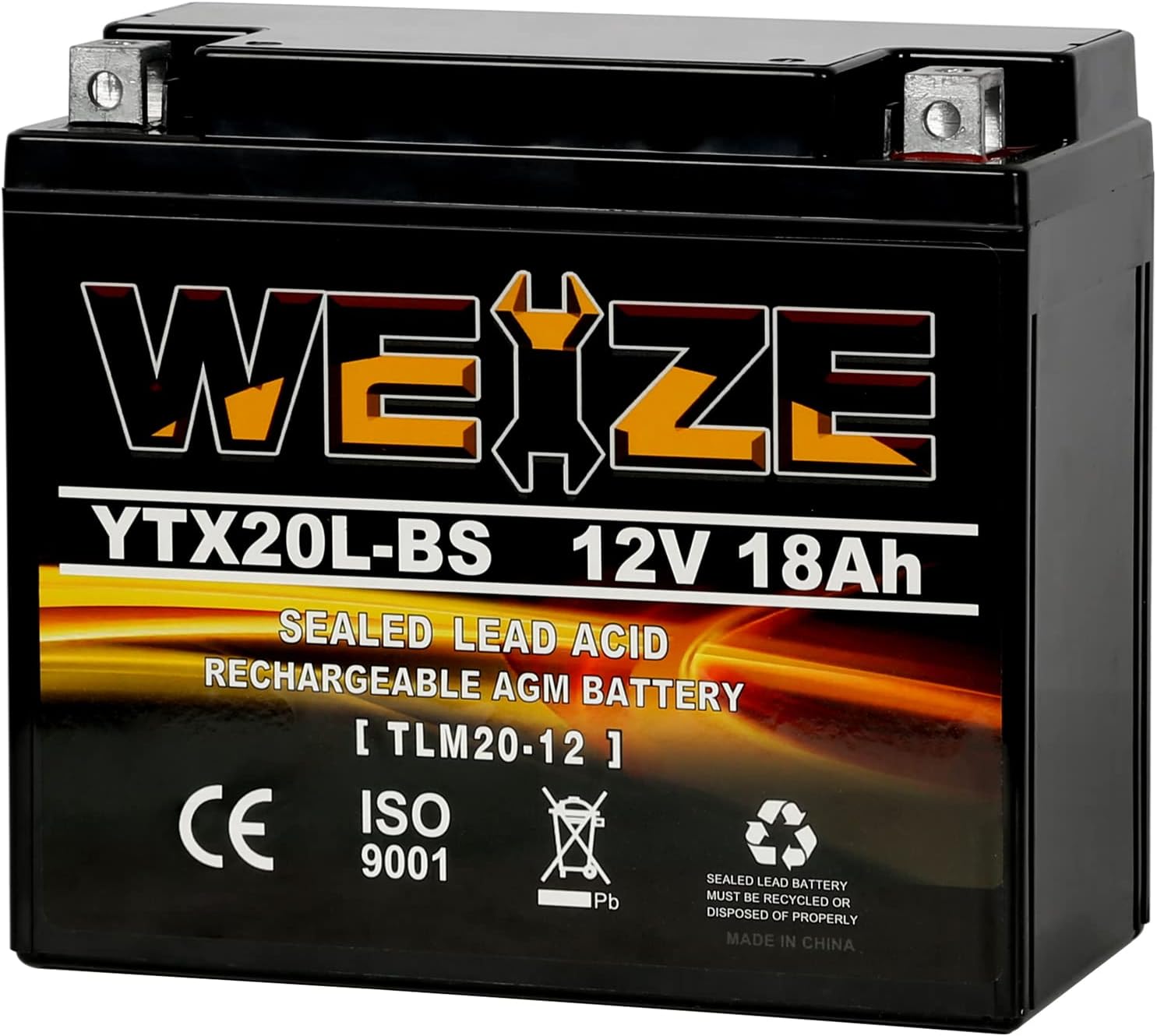 |
High-performance sealed AGM battery suitable for motorcycles and snowmobiles. | View on Amazon |
|
Mighty Max Battery ML-U1-CCAHR  |
Rechargeable SLA AGM battery with 320 CCA, ideal for various powersport applications. | View on Amazon |
|
Battanux 12N9-BS Motorcycle Battery  |
Sealed SLA/AGM battery for ATVs and motorcycles, maintenance-free with advanced technology. | View on Amazon |
Modern vehicles increasingly rely on precise electrical specifications. For instance, cars with advanced infotainment systems or auxiliary lighting require batteries with higher amp-hour ratings. A mismatched group number might provide insufficient power for these subsystems, leading to voltage drops or premature failure. Additionally, improper terminal alignment can create arcing risks or prevent secure connections, especially in vehicles with tightly packed engine compartments. Always verify both physical and electrical compatibility when replacing a battery.
What Happens If You Use the Wrong Battery Group Number?
Installing an incorrect group number risks terminal corrosion, acid leaks, or short circuits. For instance, a smaller battery might overwork to meet energy demands, while a larger one could damage the tray or wiring. Always verify compatibility using your vehicle’s make, model, engine size, and optional features (e.g., start-stop technology).
How Do You Find Your Vehicle’s Battery Group Number?
Check your owner’s manual, existing battery labels, or online tools like BCI’s fitment guide. Retailers like AutoZone or Advance Auto Parts also provide lookup tools using your license plate or vehicle details. Physical measurements (length x width x height) and terminal orientation (left/right positive) can help identify the correct group number if labels are faded.
Can You Substitute a Different Battery Group Number Safely?
Substitutions are risky but possible if the replacement matches dimensions, terminal type, and electrical specs. For example, Group 34 and Group 34/78 share similar sizes but differ in terminal placement. Consult a professional to ensure the substitute meets CCA, RC, and voltage requirements. Never prioritize size over electrical capacity.
How Have Battery Group Numbers Evolved with Automotive Technology?
Modern vehicles with start-stop systems or hybrid engines require specialized group numbers like AGM (Absorbent Glass Mat) batteries. For example, Group 48 H6 batteries are designed for high electrical loads in luxury cars. EVs often use unique lithium-ion packs instead of traditional BCI groups, reflecting advancements in energy density and thermal management.
The rise of 48-volt mild-hybrid systems has introduced new battery configurations that challenge traditional classification methods. Automakers now collaborate with BCI to create hybrid group numbers accommodating dual-voltage systems. For example, some trucks use auxiliary battery trays supporting both Group 25 (primary) and Group 47R (secondary) batteries. These developments highlight how group numbers adapt to evolving power demands while maintaining backward compatibility for serviceability.
What Role Do Industry Standards Play in Battery Group Numbers?
BCI standards harmonize global battery production, ensuring consistency for manufacturers and consumers. These standards adapt to new technologies, such as 12V lithium-ion batteries, which now have provisional group numbers. Compliance with SAE J537 and IEC 60095-1 also guarantees safety and performance across climates.
Expert Views
“Battery group numbers are the unsung heroes of vehicle compatibility,” says an automotive engineer with 20+ years in OEM battery design. “A mismatch can strain the alternator or damage sensitive electronics like ECUs. With EVs pushing voltage boundaries, future BCI standards may integrate modular designs, but for now, sticking to the manual is non-negotiable.”
Conclusion
Battery group numbers ensure your vehicle’s electrical system operates safely and efficiently. Always verify compatibility using BCI guidelines or professional tools. As automotive technology evolves, these standards will continue to adapt, but the core principle remains: the right fit guarantees reliability.
FAQs
- Q: Can a higher group number battery improve performance?
- No—using a larger battery than recommended may cause physical or electrical damage without enhancing performance.
- Q: Do electric vehicles use BCI group numbers?
- Most EVs use custom lithium-ion packs, though some hybrids (e.g., Toyota Prius) still adhere to BCI groups for auxiliary batteries.
- Q: Are group numbers the same worldwide?
- BCI standards primarily apply to North America. Europe uses ETN codes, while Asia follows JIS standards, though dimensions often overlap.