A 35 amp-hour (Ah) battery typically measures between 7.5-12 inches in length, 5-7 inches in width, and 6-9 inches in height, depending on its chemistry (lead-acid vs. lithium-ion) and application (automotive, marine, or solar). Exact dimensions vary by manufacturer, so always check specifications for compatibility.
How to Prevent Lithium-Ion Battery Fires and Explosions
How Do Amp-Hour Ratings Relate to Battery Size?
Amp-hour (Ah) ratings indicate energy storage capacity, not physical size. However, higher Ah batteries often require larger dimensions to accommodate additional cells or thicker lead plates. A 35Ah lead-acid battery is bulkier than a lithium-ion equivalent due to its lower energy density, requiring 20-30% more space for the same capacity.
What Are Standard Dimensions for 35Ah Batteries?
| Chemistry | Length (in) | Width (in) | Height (in) |
|---|---|---|---|
| Lead-Acid (Flooded) | 10.2 | 6.8 | 8.9 |
| AGM (Absorbent Glass Mat) | 9.4 | 5.1 | 8.7 |
| Lithium-Iron Phosphate (LiFePO4) | 7.5 | 5.0 | 6.3 |
Why Do Lithium 35Ah Batteries Have Smaller Footprints?
Lithium-ion batteries achieve 35Ah capacity in compact sizes (e.g., 7.5x5x6.3 inches) due to their higher energy density (150-200 Wh/kg vs. 30-50 Wh/kg for lead-acid). They use lightweight lithium compounds instead of lead plates, reducing volume by 40-60% while maintaining discharge efficiency above 95%.
Top 5 best-selling Group 14 batteries under $100
| Product Name | Short Description | Amazon URL |
|---|---|---|
|
Weize YTX14 BS ATV Battery  |
Maintenance-free sealed AGM battery, compatible with various motorcycles and powersports vehicles. | View on Amazon |
|
UPLUS ATV Battery YTX14AH-BS  |
Sealed AGM battery designed for ATVs, UTVs, and motorcycles, offering reliable performance. | View on Amazon |
|
Weize YTX20L-BS High Performance 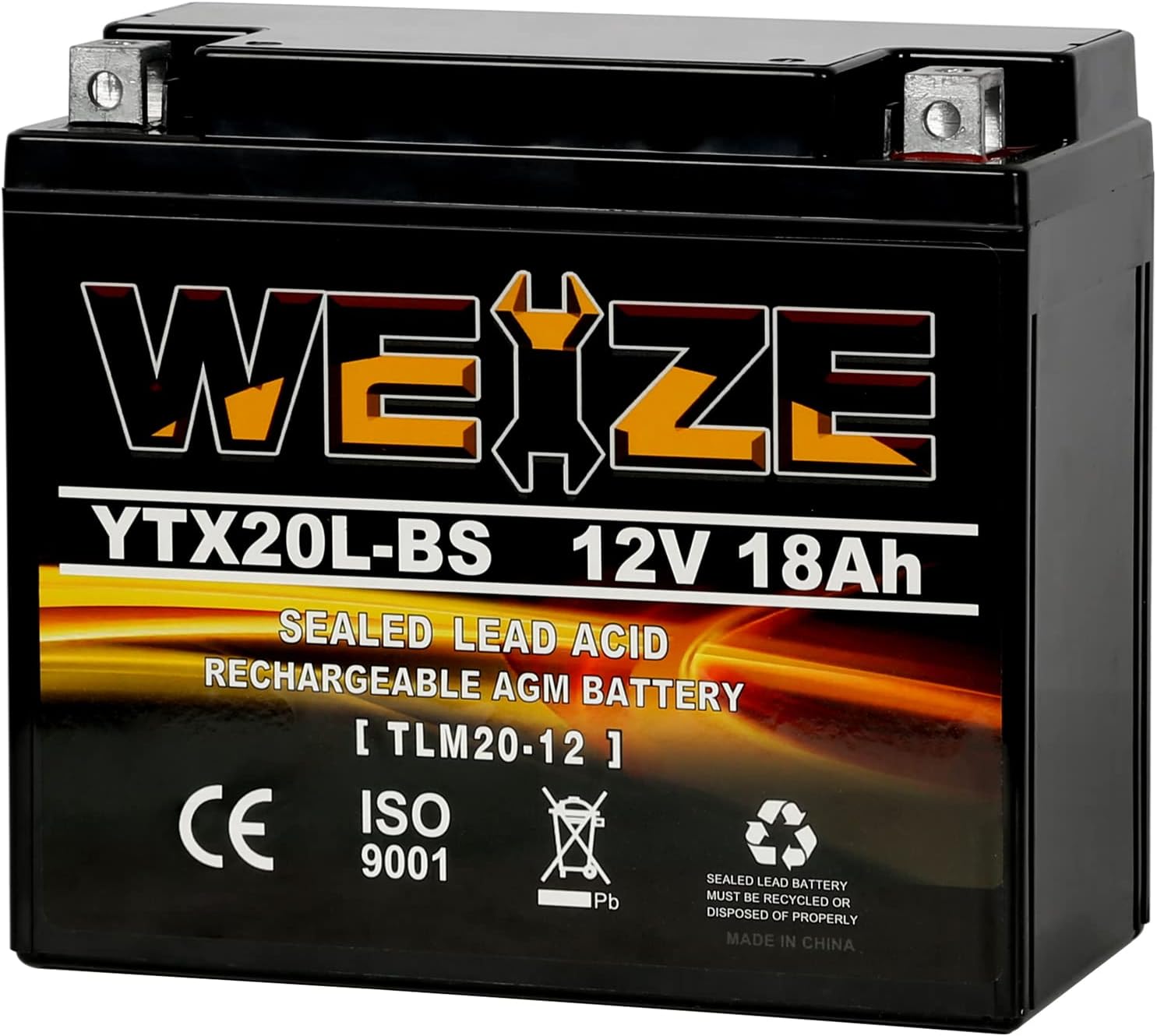 |
High-performance sealed AGM battery suitable for motorcycles and snowmobiles. | View on Amazon |
|
Mighty Max Battery ML-U1-CCAHR  |
Rechargeable SLA AGM battery with 320 CCA, ideal for various powersport applications. | View on Amazon |
|
Battanux 12N9-BS Motorcycle Battery  |
Sealed SLA/AGM battery for ATVs and motorcycles, maintenance-free with advanced technology. | View on Amazon |
Advanced cell stacking technology allows lithium batteries to utilize space more effectively. Unlike lead-acid batteries that require bulky separators between plates, lithium cells can be tightly packed in prismatic or pouch configurations. For example, a LiFePO4 battery’s modular design often includes integrated battery management systems (BMS) within the same case, eliminating the need for external voltage regulators. This consolidation enables manufacturers to shrink overall dimensions while improving thermal management—critical for applications like RVs and portable power stations where every cubic inch matters.
Which Applications Require Specific 35Ah Battery Sizes?
- Automotive: BCI Group U1 (10.3x7x8.9″) for tight engine compartments
- Marine: DIN/SAE dual-terminal (12×6.8×9.1″) for vibration resistance
- Solar: Slim lithium (8x5x7″) for modular racking systems
Marine applications demand batteries with corrosion-resistant cases and extended terminal posts to prevent electrolyte leakage in turbulent conditions. Solar installations prioritize low-profile designs that fit standard 19″ rack mounts, with some lithium models offering daisy-chain capabilities through recessed connectors. Automotive batteries must adhere to BCI group size standards to match factory mounting trays—a 0.25″ deviation in length can prevent proper clamp installation. Specialty applications like medical carts or UAVs often require custom dimensions, with some manufacturers offering 35Ah batteries as thin as 3.5″ for integration into equipment panels.
Does Temperature Affect 35Ah Battery Dimensions?
Extreme temperatures cause thermal expansion/contraction in lead-acid batteries, altering dimensions by up to 3%. Lithium batteries remain stable within 1% due to built-in battery management systems (BMS). Always allow 0.5-inch clearance around lead-acid batteries in hot environments to accommodate swelling.
How to Measure Battery Size for Replacement?
- Step 1: Measure length (terminal to terminal)
- Step 2: Record width (side to side)
- Step 3: Check height including posts
- Step 4: Verify terminal type (top-post vs. side-post)
- Step 5: Compare with manufacturer datasheets
Expert Views
“The shift to lithium has redefined size expectations—our 35Ah LiFePO4 units now fit where only 20Ah lead-acid could before. However, installers must update mounting systems; the 30% weight reduction can lead to insecure clamping if using legacy hardware.” – Senior Engineer, Battery Solutions Inc.
Conclusion
Understanding a 35Ah battery’s size requires analyzing its chemistry, terminal configuration, and application constraints. While lithium variants offer space savings, traditional lead-acid remains prevalent in standardized formats. Always cross-reference physical measurements with Ah ratings to ensure optimal performance and safety in your specific use case.
FAQs
- Can I Replace a Lead-Acid 35Ah Battery with Lithium?
- Yes, if the lithium battery matches voltage (12V) and dimensions. Ensure the charging system is compatible with lithium chemistry to avoid overvoltage damage.
- Are All 35Ah Batteries Interchangeable?
- No—terminal positions, case design, and mounting style (base vs. side clamp) vary between manufacturers. Always verify physical specs before swapping.
- Does a Smaller 35Ah Battery Have Less Power?
- No—lithium’s compact size doesn’t reduce power. A 35Ah lithium battery actually delivers more usable energy (≈33Ah) than lead-acid (≈17.5Ah) due to deeper discharge capabilities.