Why does my AGM battery keep dying? AGM batteries fail due to improper charging, deep discharges, extreme temperatures, or sulfation. Overcharging or undercharging damages internal components, while frequent deep cycles reduce lifespan. Temperature fluctuations accelerate chemical degradation. Preventive measures include using compatible chargers, avoiding full discharges, and storing batteries in moderate climates.
How to Test Continuity with a Multimeter
What Causes AGM Battery Failure?
AGM battery failure stems from sulfation (sulfate crystal buildup on plates), overcharging (causing electrolyte loss), undercharging (leading to stratification), and excessive heat/cold. Vibration damage and manufacturing defects also contribute. For example, charging a 12V AGM battery above 14.8V risks warping plates, while temperatures below -20°C can freeze electrolytes.
How Can Improper Charging Damage AGM Batteries?
Using non-AGM-specific chargers or incorrect voltage settings causes gas buildup, plate corrosion, and thermal runaway. A study by Battery University found AGMs charged at 15V+ suffer 40% faster capacity loss. Optimal charging uses 14.4-14.8V for absorption and 13.2-13.8V for float stages. Smart chargers with temperature compensation prevent overvoltage in hot environments.
Top 5 best-selling Group 14 batteries under $100
| Product Name | Short Description | Amazon URL |
|---|---|---|
|
Weize YTX14 BS ATV Battery  |
Maintenance-free sealed AGM battery, compatible with various motorcycles and powersports vehicles. | View on Amazon |
|
UPLUS ATV Battery YTX14AH-BS  |
Sealed AGM battery designed for ATVs, UTVs, and motorcycles, offering reliable performance. | View on Amazon |
|
Weize YTX20L-BS High Performance 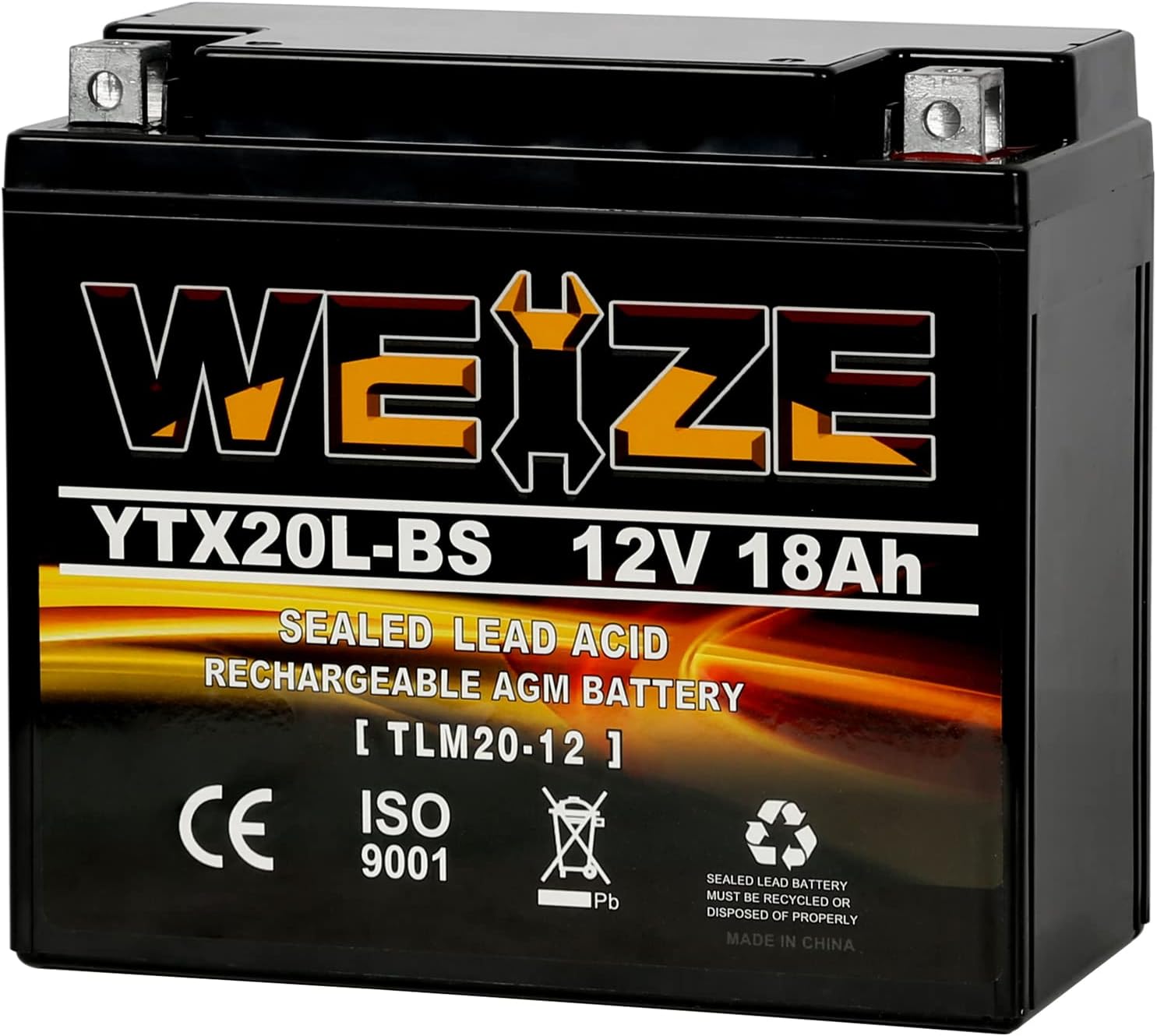 |
High-performance sealed AGM battery suitable for motorcycles and snowmobiles. | View on Amazon |
|
Mighty Max Battery ML-U1-CCAHR  |
Rechargeable SLA AGM battery with 320 CCA, ideal for various powersport applications. | View on Amazon |
|
Battanux 12N9-BS Motorcycle Battery  |
Sealed SLA/AGM battery for ATVs and motorcycles, maintenance-free with advanced technology. | View on Amazon |
What Are Common Signs of a Failing AGM Battery?
Key indicators include swollen casing (from overpressure), voltage drops below 10.5V under load, slow engine cranking, and inability to hold 12.6V+ after 24 hours. Internal resistance exceeding 20% of original specs signals degradation. A 100Ah battery showing less than 70Ah capacity during load testing requires replacement.
Does Temperature Affect AGM Battery Lifespan?
Yes. For every 8°C above 25°C, AGM lifespan halves. At -30°C, capacity drops 50%. Thermal cycling between extreme temperatures causes plate expansion/contraction, accelerating structural fatigue. Arctic applications require insulated battery boxes, while desert users need shaded, ventilated compartments to maintain 15-35°C operating range.
Battery manufacturers recommend active thermal management systems for extreme environments. In solar installations, positioning batteries away from heat-reflective surfaces can reduce thermal stress by 18-22%. Data from telecom backup systems shows AGM batteries maintained at 20°C consistently outperform those exposed to seasonal temperature swings by 30-40% in cycle life. A simple solution involves using temperature-controlled enclosures with thermostatic fans to dissipate excess heat during summer months.
| Temperature Range | Expected Lifespan | Capacity Retention |
|---|---|---|
| 0°C to 25°C | 5-7 years | 95-100% |
| 26°C to 35°C | 3-4 years | 85-90% |
| Above 35°C | 1-2 years | 60-75% |
How Does Storage Impact AGM Battery Health?
Stored AGM batteries lose 1-3% charge monthly. Below 12.4V, sulfation begins. Six months at 12V results in 20-30% capacity loss. Ideal storage requires 13.2V maintenance charging at 15°C. Desiccants should control humidity below 60% to prevent terminal corrosion. Rotating batteries monthly prevents flat-spotting in stationary applications.
Long-term storage protocols suggest disconnecting all loads and cleaning terminals with baking soda solution before storage. Marine battery banks stored over winter should be charged to 14.4V then maintained with a float charger. Industrial users often employ pulse desulfation devices during storage – these apply high-frequency signals to break down sulfate crystals, preserving up to 97% of initial capacity after 12 months of inactivity. Always store batteries upright on wooden pallets to minimize ground moisture absorption.
| Storage Duration | Recommended Voltage | Maintenance Action |
|---|---|---|
| 1-3 months | 12.8V+ | Monthly voltage check |
| 3-6 months | 13.2V | Biweekly charging |
| 6+ months | 13.6V | Connected to maintainer |
Are AGM Batteries Compatible With All Charging Systems?
No. Alternators without voltage regulation below 14.8V risk overcharging. Lithium-focused solar controllers may skip AGM-required absorption phases. Marine systems combining AGM and flooded batteries create imbalance. Use charge controllers with AGM presets (like Victron BlueSmart) and isolate battery banks when mixing types.
Can AGM Batteries Recover From Deep Discharge?
Partial recovery is possible if voltage stays above 10.5V. A 3-stage equalization charge at 15.5V for 2-4 hours can dissolve minor sulfation. However, cycles below 50% DoD permanently reduce capacity. Data shows 5 deep discharges (to 20%) decrease total cycles from 500 to 300 in premium AGMs.
Expert Views
“AGM failures often trace to charging complacency. Users assume ‘maintenance-free’ means zero oversight, but smart monitoring is crucial. I recommend bimonthly voltage checks and annual conductance testing. For critical systems, invest in battery monitors like Victron BMV-712 that track state-of-charge and health metrics in real-time.” — Senior Engineer, Renewable Energy Systems
Conclusion
AGM battery longevity requires understanding their electrochemical sensitivities. By implementing temperature-controlled charging (14.7V ±0.2V @25°C), maintaining 50%+ DoD, and conducting quarterly load tests, users can achieve 5-7 year lifespans. Pair with active balancing systems in multi-bank setups and prioritize desulfation maintenance during prolonged storage.
FAQs
- Q: Can I jumpstart an AGM battery?
- Yes, but avoid revving above 2,500 RPM. Excess current from alternators can spike voltage beyond 15V, damaging AGM cells.
- Q: How often should I test my AGM battery?
- Conduct monthly voltage checks and annual capacity tests. Use load testers applying CCA-rated amperage for 15 seconds; voltage should stay above 9.6V.
- Q: Are AGM batteries safer than flooded?
- Yes. Sealed construction prevents acid spills, and recombinant technology reduces hydrogen emission by 95% compared to flooded batteries.